Cyprus

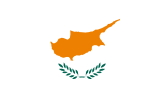
Country flag available in this resolutions
| Icon 32x19 |  |
| Icon 88x53 |  |
Cyprus
Cyprus: An Island of Contrasts and Enduring Charm
Cyprus, the third-largest island in the Mediterranean Sea, is a land steeped in history, blessed with a stunning natural landscape, and characterized by a complex geopolitical reality. Its strategic location, bridging Europe, Asia, and Africa, has made it a coveted prize throughout millennia, shaping its diverse cultural tapestry and influencing its economic trajectory. From ancient civilizations to modern-day tourism, Cyprus offers a captivating blend of tradition and progress, a place where myths and realities intertwine.
The island’s geography is a significant factor in its appeal and development. Dominated by two mountain ranges, the Troodos Mountains in the south and the Kyrenia Range along the northern coast, Cyprus boasts a varied terrain. The Troodos, with its highest peak Mount Olympus reaching 1,952 meters, is a verdant expanse of pine forests, vineyards, and picturesque villages, offering a cooler respite from the coastal heat. The Kyrenia Range, on the other hand, is known for its dramatic, rugged peaks and the iconic castles that cling to its slopes, remnants of Crusader and Venetian rule. Between these mountain ranges lie fertile plains, most notably the Mesaoria, which historically served as the island’s breadbasket. The coastline is equally diverse, featuring long sandy beaches, secluded coves, and dramatic cliffs, particularly in the Akamas Peninsula. This natural beauty is a cornerstone of Cyprus’s economy, drawing millions of tourists annually who come to enjoy the sun, sea, and rich historical sites. The Mediterranean climate, with its long, hot summers and mild, wet winters, further enhances its attractiveness as a holiday destination.
Historically, Cyprus has been a crossroads of civilizations, its strategic position attracting a succession of rulers and settlers. Evidence of human habitation dates back to the Neolithic period, with significant archaeological discoveries at sites like Choirokoitia, a UNESCO World Heritage site. The Bronze Age saw the rise of sophisticated urban centers and extensive trade networks, particularly in copper, which gave the island its name. Throughout antiquity, Cyprus was influenced by the Mycenaeans, Phoenicians, Assyrians, Egyptians, and Persians. Its Hellenistic period was marked by the influence of Alexander the Great and his successors, followed by Roman rule. The island’s strategic importance continued into the Byzantine era, when it became a significant Christian center. The medieval period witnessed the arrival of the Lusignans, who established a kingdom, and later the Venetians, who fortified key cities like Famagusta and Kyrenia. The Ottoman Empire conquered the island in 1571, ushering in a period of Ottoman administration that lasted for over three centuries. In 1878, Cyprus was ceded to Great Britain, initially as a protectorate and later as a Crown Colony. This British period laid the groundwork for many of the island’s modern institutions. The struggle for independence culminated in the establishment of the Republic of Cyprus in 1960, a complex arrangement that included power-sharing provisions between the Greek Cypriot and Turkish Cypriot communities. However, intercommunal tensions, exacerbated by external influences, led to a tragic period of conflict in the 1960s and 1970s, culminating in the division of the island in 1974 following a Greek-backed coup and subsequent Turkish invasion. This division remains the island’s most significant geopolitical challenge, with the southern part forming the internationally recognized Republic of Cyprus and the northern part being governed by the self-declared Turkish Republic of Northern Cyprus, recognized only by Turkey.
The demographic landscape of Cyprus reflects its complex history and political division. Prior to 1974, the island was inhabited by a mixed population of Greek Cypriots and Turkish Cypriots, with smaller communities of Armenians, Maronites, and Latins. The events of 1974 led to a significant displacement of populations, with the vast majority of Greek Cypriots moving to the south and Turkish Cypriots to the north. The Republic of Cyprus is now predominantly Greek Cypriot, with a small but significant Muslim minority and a growing expatriate population, particularly from the UK, Russia, and other European countries, attracted by the lifestyle and favorable tax regime. The Turkish Cypriot community forms the majority in the north. The overall population of the island is approximately 1.2 million, with the majority residing in the southern part. The birth rate in the Republic of Cyprus is relatively low, and the population is aging, a trend common in many developed European nations. The influx of foreign residents has helped to mitigate some of these demographic challenges. The linguistic landscape is also divided, with Greek being the primary language in the south and Turkish in the north. English is widely spoken throughout the island, particularly in tourist areas and business circles, a legacy of British rule and a testament to the island’s international connections.
Economically, Cyprus has undergone a remarkable transformation, particularly in the southern part of the island which is a member of the European Union. Historically, agriculture, especially the cultivation of citrus fruits, olives, and carobs, played a significant role. However, in recent decades, the economy has shifted towards a service-based model, with tourism and financial services becoming the dominant sectors. The island’s strategic location and favorable tax policies have attracted significant foreign investment, making it an important regional financial center. The tourism industry is a vital source of revenue, with millions of visitors arriving each year to enjoy its beaches, historical sites, and vibrant nightlife. The hospitality sector is a major employer, and the government has invested heavily in developing and promoting tourism infrastructure. Other important sectors include shipping, with Cyprus boasting one of the largest merchant fleets in the world, and real estate. The Republic of Cyprus joined the Eurozone in 2008, further integrating its economy with that of the European Union. Despite facing economic challenges, including the banking crisis of 2013, the Cypriot economy has shown resilience and a capacity for recovery. In the northern part of the island, the economy is largely dependent on tourism, agriculture, and trade with Turkey. The economic disparity between the two parts of the island is a significant consequence of the ongoing division.
Cyprus’s rich history is evident in its numerous archaeological sites, ancient ruins, and medieval castles. From the well-preserved mosaics of the Roman villa in Paphos to the imposing Crusader castles of Kyrenia and St. Hilarion, the island offers a tangible connection to its past. The Byzantine churches of the Troodos Mountains, many of which are UNESCO World Heritage sites, showcase exquisite frescoes and architectural styles. The island’s cultural heritage is a source of national pride and a significant draw for visitors interested in history and archaeology. This heritage is not merely confined to ancient stones; it is alive in the traditions, music, dance, and cuisine of the Cypriot people. The island’s cuisine is a delightful fusion of Greek, Turkish, and Middle Eastern influences, characterized by fresh ingredients, olive oil, and a variety of mezes. Halloumi cheese, commandaria wine, and souvlaki are just a few of the culinary delights that exemplify the island’s gastronomic richness.
In conclusion, Cyprus is an island of captivating contrasts. Its stunning natural beauty, from the sun-drenched beaches to the pine-scented mountains, is matched by a history as rich and complex as the civilizations that have left their mark upon it. The island’s demographic and economic landscape, shaped by centuries of conquest and its current geopolitical reality, presents a unique narrative of resilience and adaptation. While the division remains a poignant aspect of its identity, the enduring charm of Cyprus, its vibrant culture, and its strategic importance continue to draw people from across the globe, making it a truly remarkable destination.
Information about country Cyprus
Automated text translation, excuse errors, please!
Informations are from the publication CIA The World Factbook.
Country Cyprus is situated in a location / continent Europe. Cyprus has an area of 9 251 km2 and 1 138 071 residents. The highest point has a height 1 951 above sea level. and it is called Mount Olympus. The lowest point is located at the level of 0 above sea level and it is named Mediterranean Sea. System of government is republic and the date of independence 16th August 1960. The capital city is Nicosia (Lefkosia). Cyprus has the international abbreviation CY.
Cyprus - economy
Total gross domestic product (GDP) is 24 030 000 000 $. Total gross domestic product per capita in purchasing power parity is 29 400 $. GDP grows by 0.50 % a year. Inflation (consumer price index) is equal to 3.30 % a year. Cyprus have 414 100 working-age population (from a total population 1 138 071 people). Unemployment is at 7.70 %. Cyprus issued 6.00 % GDP to healt care and 3,80 % GDP to army. The public debt of the country is 65.80 % GDP. The total amount of foreign debt is 35 870 000 000 USD.
Cyprus - transport and telecommunications
Cyprus has 14 671 km of roads and 15 airports. There is registered 838 ships.
Number of active mobile phones (sim card) in the country Cyprus is 1 090 000. Number of active fixed telephone lines is 405 000. Cyprus has 433 900 internet users, who have the available 252 990 Internet connections. Cyprus has been assigned a domain first Choose range .cy.
Cyprus - demography
As suggested above, Cyprus has 1 138 071 people. Population growth is in the amount 1.57 % per year. Number of children born per 1000 population per year is 11.44.Every mother has average 1.45 children. The infant mortality rate is 9.05 and maternal mortality 10.00 deaths per 100,000 births. Average estimated life expectancy makes 78.00 years. Mortality is 6.48 people per 1000 population per year.
Cyprus - energetics
Cyprus consumes a year 4 698 000 000 kWh of electricity. Annual electricity production is 4 887 000 000 kWh in power plants with a total installed electrical capacity 1 392 000 kW. Cyprus exports 0 kWh and imports 0 kWh of electricity per year Energy mix of power generation is as follows: fossil fuels: 99.7 %, nuclear energy: 0 %, renewable: 0.3 %, hydropower: 0.0 %.
Country flags
Flags of the world countries
Flags of the World countries
Dále doporučujeme:
Naše tipy na zajímavé stránkyDoporučené internetové odkazy
Zajímavé internetové odkazy
Odkazy nejen na naše partnerské weby
Zajímavé linky na nejrůznější weby
 |
 |
 |
 |
 |
 |
 |
 |
 |
 |
 |
 |
 |
 |
 |
 |
 |
 |
 |