Czech Republic
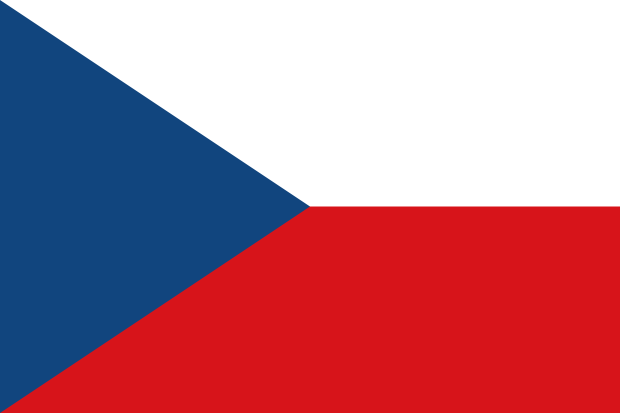
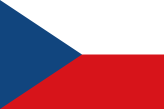
Country flag available in this resolutions
| Icon 32x21 |  |
| Icon 88x59 |  |
Czech Republic
The Czech Republic, officially known as the Czech Republic, is a landlocked country situated in the heart of Central Europe. Its strategic location has profoundly shaped its history, culture, and economic development, making it a crossroads of various European influences. The nation’s geography is characterized by a diverse landscape, ranging from the rolling hills and fertile plains of Bohemia in the west to the rugged mountains of Moravia in the east. The country is bordered by Germany to the west and northwest, Poland to the north and northeast, Slovakia to the east, and Austria to the south. This central position has historically made it a vital transit route and a buffer zone between major European powers. The highest point is Sněžka (1,603 meters above sea level) in the Krkonoše Mountains on the Polish border, while the lowest point is the Elbe River near the German border. Major rivers like the Vltava and the Elbe flow through the country, providing essential water resources and historical transportation routes. The climate is temperate continental, with warm summers and cold, snowy winters, though regional variations exist.
The demographic landscape of the Czech Republic is marked by a relatively homogeneous population, with Czechs forming the vast majority. However, there are significant minority groups, most notably Slovaks, Poles, and a Roma population. The country experienced a demographic shift after the Velvet Revolution in 1989, with a decline in birth rates and an increase in life expectancy, leading to an aging population, a common trend in many developed European nations. The capital city, Prague, is the largest urban center and a major hub for culture, business, and tourism, attracting a significant portion of the countrys population and a substantial number of international residents. The overall population density is moderate, with higher concentrations in urban areas and industrial regions. The Czech Republic has a well-established healthcare system and a high literacy rate, reflecting its commitment to social welfare and education. The official language is Czech, a West Slavic language, and its rich linguistic heritage is a testament to centuries of cultural exchange.
Economically, the Czech Republic is a developed, high-income country with a strong export-oriented market economy. Following the transition from a centrally planned economy after 1989, the country has undergone significant privatization and liberalization, integrating itself successfully into the global economy. The automotive industry is a cornerstone of its economy, with major international manufacturers having production facilities within the country. Other key sectors include machinery and equipment, electronics, chemicals, and services. The Czech Republic is a member of the European Union and the Eurozone, although it has not yet adopted the euro, maintaining its own currency, the Czech koruna. This has provided access to the EU’s single market, fostering trade and investment. Foreign direct investment has played a crucial role in modernizing its industrial base and creating employment opportunities. The country has a relatively low unemployment rate compared to many other European nations, and its economic growth has been steady, though subject to global economic fluctuations. Challenges remain, including the need for further investment in research and development, addressing regional economic disparities, and navigating the complexities of global supply chains.
The history of the Czech Republic is a long and complex tapestry woven from centuries of political upheaval, cultural flourishment, and the struggle for national identity. The region’s strategic importance has made it a prize for various empires and powers throughout history. The medieval Kingdom of Bohemia, under rulers like Charles IV, was a significant European power, with Prague serving as a vibrant cultural and political center. The Hussite Wars in the 15th century marked a pivotal religious and social upheaval, foreshadowing later religious conflicts in Europe. The Habsburg Monarchy ruled the Czech lands for centuries, a period characterized by both periods of cultural development and national suppression. The 19th century saw a resurgence of Czech national consciousness, with a growing demand for autonomy. The First World War led to the dissolution of the Austro-Hungarian Empire and the formation of Czechoslovakia in 1918, a republic that encompassed both Czech and Slovak peoples. This interwar period was a golden age for Czechoslovak democracy and industry. However, the Munich Agreement of 1938 and the subsequent Nazi occupation during World War II brought an end to this era. After the war, Czechoslovakia fell under Soviet influence and became a communist state. The Prague Spring of 1968, an attempt at liberalization, was brutally suppressed by Warsaw Pact forces. The Velvet Revolution in 1989 peacefully overthrew the communist regime, ushering in a new era of democracy and market reforms. In 1993, Czechoslovakia peacefully dissolved into two independent states: the Czech Republic and Slovakia. Since then, the Czech Republic has focused on democratic consolidation, economic modernization, and integration into Western European structures, including NATO and the European Union. The nation’s historical resilience and its ability to adapt to changing geopolitical landscapes are defining characteristics of its enduring spirit.
Information about country Czech Republic
Automated text translation, excuse errors, please!
Informations are from the publication CIA The World Factbook.
Country Czech Republic is situated in a location / continent Europe. Czech Republic has an area of 78 867 km2 and 10 177 300 residents. The highest point has a height 1 602 above sea level. and it is called Snezka. The lowest point is located at the level of 115 above sea level and it is named Elbe. and the date of independence First January 1993. The capital city is Prague. Czech Republic has the international abbreviation EZ.
Czech Republic - economy
Total gross domestic product (GDP) is 288 600 000 000 $. Total gross domestic product per capita in purchasing power parity is 27 400 $. GDP grows by 1.70 % a year. Inflation (consumer price index) is equal to 1.90 % a year. Czech Republic have 5 410 000 working-age population (from a total population 10 177 300 people). Unemployment is at 8.50 %. Czech Republic issued 7.60 % GDP to healt care .The public debt of the country is 40.70 % GDP. The total amount of foreign debt is 101 600 000 000 USD.
Czech Republic - transport and telecommunications
Czech Republic has 127 797 km of roads, 9 469 km of railway lines and 128 airports. The total length of waterways (navigable rivers, canals, etc.) is 664 km. There is registered 1 ships.
Number of active mobile phones (sim card) in the country Czech Republic is 12 810 000. Number of active fixed telephone lines is 2 202 000. Czech Republic has 6 681 000 internet users, who have the available 4 140 000 Internet connections. Czech Republic has been assigned a domain first Choose range .cz.
Czech Republic - demography
As suggested above, Czech Republic has 10 177 300 people. Population growth is in the amount -0.13 % per year. Number of children born per 1000 population per year is 8.62.Every mother has average 1.27 children. The infant mortality rate is 3.70 and maternal mortality 5.00 deaths per 100,000 births. Average estimated life expectancy makes 77.38 years. Mortality is 10.94 people per 1000 population per year.
Czech Republic - energetics
Czech Republic consumes a year 58 880 000 000 kWh of electricity. Annual electricity production is 80 440 000 000 kWh in power plants with a total installed electrical capacity 18 320 000 kW. Czech Republic exports 21 590 000 000 kWh and imports 6 642 000 000 kWh of electricity per year Energy mix of power generation is as follows: fossil fuels: 60 %, nuclear energy: 20.9 %, renewable: 7.1 %, hydropower: 5.7 %. The country Czech Republic is harvested annually 9 162 barrels of oil.
Country flags
Flags of the world countries
Flags of the World countries
Dále doporučujeme:
Tipy na užitečné webyOdkazy nejen na naše partnerské weby
Odkazy na zajímavé weby
Odkazy na partnerské weby
Doporučené odkazy na zajímavé weby
 |
 |
 |
 |
 |
 |
 |
 |
 |
 |
 |
 |
 |
 |
 |
 |
 |
 |
 |