Denmark
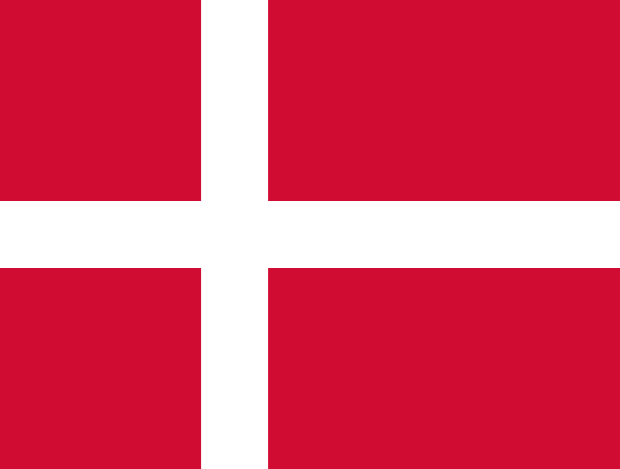
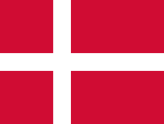
Country flag available in this resolutions
| Icon 32x24 |  |
| Icon 88x67 |  |
Denmark
Denmark: A Nordic Gem of Innovation and Quality of Life
Denmark, a Scandinavian nation nestled in Northern Europe, consistently ranks among the worlds happiest and most prosperous countries. Its reputation is built on a unique blend of a strong welfare state, a deeply ingrained sense of community, and a forward-thinking approach to economic and social development. This small but influential country, officially the Kingdom of Denmark, comprises a peninsula, Jutland, and a vast archipelago of over 400 islands, the largest and most populated being Zealand. Its strategic location, bordering Germany to the south and connected to Sweden by the resund Bridge, has historically positioned it as a vital hub for trade and cultural exchange. The Danes are known for their pragmatic and egalitarian outlook, a philosophy that permeates their society from the highest levels of government down to everyday interactions. This article delves into the multifaceted aspects of Denmark, exploring its demographics, economy, geography, and rich history, offering a glimpse into what makes this Nordic nation so remarkable.
The demographic landscape of Denmark is characterized by a relatively stable and aging population, a common trend across many developed European nations. With a population of approximately 5.9 million people, Denmark boasts a high life expectancy, a testament to its excellent healthcare system and high living standards. The Danish population is largely homogenous, with ethnic Danes forming the vast majority. However, in recent decades, Denmark has experienced an increase in immigration, contributing to a growing multicultural society. This influx of people from diverse backgrounds, while enriching the nations cultural tapestry, has also presented societal challenges related to integration and social cohesion, a topic of ongoing discussion and policy development. The Danish approach to integration emphasizes language acquisition, civic education, and active participation in the labor market, aiming to foster a sense of belonging and shared responsibility. The country’s low birth rate, coupled with its high life expectancy, means that Denmark, like many other Western European countries, faces the challenge of an aging population and its implications for the workforce and social security systems. However, proactive policies and a strong emphasis on lifelong learning and retraining are in place to address these demographic shifts.
Economically, Denmark is a highly developed and prosperous nation, renowned for its open market economy and strong emphasis on innovation and sustainability. It is consistently ranked among the top countries globally for ease of doing business and competitiveness. The Danish economy is characterized by a strong social market economy model, where a robust welfare state is financed through high taxes, but in return, citizens enjoy comprehensive social services, including free healthcare and education. Key sectors of the Danish economy include pharmaceuticals, renewable energy, shipping, and design. The country is a global leader in wind energy technology, with companies like Vestas playing a pivotal role in the transition to a green economy. Agriculture also remains an important sector, with Denmark being a significant exporter of pork and dairy products. The Danish labor market is known for its flexibility, often referred to as the flexicurity model, which combines a high degree of employment protection with a generous unemployment benefit system and active labor market policies to help the unemployed find new jobs. This model has been credited with maintaining low unemployment rates and fostering adaptability in the workforce. Furthermore, Denmark’s commitment to research and development, coupled with its highly skilled workforce, fuels a culture of innovation that drives economic growth and positions the country at the forefront of various industries.
Geographically, Denmark is a low-lying country, with its highest point, Mllehj, reaching only 170.86 meters above sea level. This flat terrain makes it ideal for cycling, a mode of transportation deeply embedded in Danish culture. The countrys extensive coastline, dotted with sandy beaches and picturesque fishing villages, offers ample opportunities for recreation and tourism. The climate is temperate, with mild winters and cool summers, influenced by the surrounding seas. The archipelago nature of Denmark means that water plays a significant role in its geography, with numerous straits and channels connecting the Baltic Sea to the North Sea. This maritime heritage has shaped Denmarks history and economy, fostering a strong seafaring tradition and a significant presence in global shipping. The Danish landscape is also characterized by its well-maintained agricultural land and extensive forests, reflecting a deep respect for nature and a commitment to environmental conservation. The country’s urban centers, such as Copenhagen, Aarhus, and Odense, are known for their charming architecture, vibrant cultural scenes, and efficient public transport systems, further enhancing the quality of life for its residents.
The history of Denmark is a long and fascinating saga, stretching back to the Viking Age. The Vikings, renowned seafarers and warriors, established a powerful kingdom in the region, leaving a lasting legacy on Danish culture and identity. Throughout the Middle Ages, Denmark played a significant role in Scandinavian politics, often engaged in conflicts and alliances with its neighbors, Norway and Sweden. The Kalmar Union, formed in 1397, briefly united these three Scandinavian kingdoms under a single monarch, though it ultimately proved unsustainable. The Reformation in the 16th century brought significant religious and political changes, with Denmark officially adopting Lutheranism. The country experienced periods of both expansion and contraction, with its territories fluctuating over the centuries. The 19th century saw the loss of Schleswig and Holstein to Prussia, a pivotal moment in Danish history that led to a redefinition of national identity. In the 20th century, Denmark remained neutral during World War I but was occupied by Nazi Germany during World War II. The post-war era marked a period of reconstruction and the further development of its welfare state, solidifying its position as a modern, progressive nation. Denmarks history is a testament to its resilience, adaptability, and enduring commitment to its own unique path, a journey that continues to shape its present and future.
Information about country Denmark
Automated text translation, excuse errors, please!
Informations are from the publication CIA The World Factbook.
Country Denmark is situated in a location / continent Europe. Denmark has an area of 43 094 km2 and 5 543 453 residents. The highest point has a height 173 above sea level. and it is called Yding Skovhoej. The lowest point is located at the level of -7 above sea level and it is named Lammefjord. System of government is constitutional monarchy.The capital city is Copenhagen. Denmark has the international abbreviation DA.
Denmark - economy
Total gross domestic product (GDP) is 209 200 000 000 $. Total gross domestic product per capita in purchasing power parity is 37 600 $. GDP grows by 1.10 % a year. Inflation (consumer price index) is equal to 2.80 % a year. Denmark have 2 853 000 working-age population (from a total population 5 543 453 people). Unemployment is at 6.00 %. Denmark issued 7.00 % GDP to healt care and 1,30 % GDP to army. The public debt of the country is 44.20 % GDP. The total amount of foreign debt is 626 900 000 000 USD.
Denmark - transport and telecommunications
Denmark has 73 197 km of roads, 2 667 km of railway lines and 89 airports. The total length of waterways (navigable rivers, canals, etc.) is 400 km. There is registered 367 ships.
Number of active mobile phones (sim card) in the country Denmark is 7 047 000. Number of active fixed telephone lines is 2 515 000. Denmark has 4 750 000 internet users, who have the available 4 285 000 Internet connections. Denmark has been assigned a domain first Choose range .dk.
Denmark - demography
As suggested above, Denmark has 5 543 453 people. Population growth is in the amount 0.24 % per year. Number of children born per 1000 population per year is 10.22.Every mother has average 1.74 children. The infant mortality rate is 4.19 and maternal mortality 12.00 deaths per 100,000 births. Average estimated life expectancy makes 78.78 years. Mortality is 10.19 people per 1000 population per year.
Denmark - energetics
Denmark consumes a year 32 420 000 000 kWh of electricity. Annual electricity production is 36 390 000 000 kWh in power plants with a total installed electrical capacity 13 420 000 kW. Denmark exports 11 730 000 000 kWh and imports 10 600 000 000 kWh of electricity per year Energy mix of power generation is as follows: fossil fuels: 65.8 %, nuclear energy: 0 %, renewable: 34.2 %, hydropower: 0.1 %. The country Denmark is harvested annually 221 100 barrels of oil.
Country flags
Flags of the world countries
Flags of the World countries
Dále doporučujeme:
Naše tipy na užitečné webyZajímavé linky na nejrůznější weby
Tipy na Partnerské weby
Tipy na zajímavé weby
Odkazy na užitečné webové stránky
 |
 |
 |
 |
 |
 |
 |
 |
 |
 |
 |
 |
 |
 |
 |
 |
 |
 |
 |