Djibouti
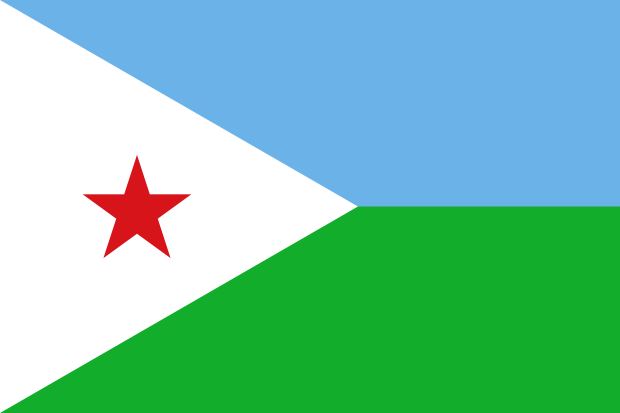
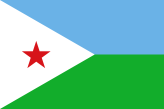
Country flag available in this resolutions
| Icon 32x21 |  |
| Icon 88x59 |  |
Djibouti
Here is a ~3000 character article about Djibouti in English, following your specifications:
Djibouti, officially the Republic of Djibouti, is a small but strategically vital nation located in the Horn of Africa, at the confluence of the Red Sea and the Gulf of Aden. Its strategic position has profoundly shaped its history, economy, and international relations. The country is bordered by Eritrea to the northwest, Ethiopia to the southwest, Somalia to the southeast, and the Red Sea and the Gulf of Aden to the east. This location has historically made it a crucial waypoint for maritime trade and a point of interest for global powers. The landscape of Djibouti is predominantly arid and semi-arid, characterized by vast, desolate plains, volcanic formations, and rugged mountains. The country boasts a coastline of approximately 314 kilometers, featuring several natural harbors and bays. Notable geographical features include the Ghoubbet-el-Kharab, a volcanic gulf, and Lake Assal, a salt lake situated at the lowest point in Africa, renowned for its high salinity. The climate is typically hot and dry, with average temperatures often exceeding 30°C (86°F) throughout the year, and rainfall is scarce and irregular, contributing to the country’s water scarcity challenges. Despite its harsh environment, Djibouti possesses unique ecosystems, including coral reefs along its coast, which support marine biodiversity.
The demographic profile of Djibouti is characterized by a relatively small population, estimated to be around one million people. The population is ethnically diverse, with the two largest ethnic groups being the Somali (primarily Issa clan) and the Afar. Other minority groups include Arabs, Ethiopians, and Europeans. The official languages are Arabic and French, though Somali and Afar are widely spoken in daily life. The majority of the population adheres to Islam, with a small Christian minority. The capital city, Djibouti City, is the largest urban center and the economic and administrative heart of the nation, housing a significant portion of the country’s inhabitants. The population density is low, with most people living in or near the coastal areas and major towns, while vast interior regions remain sparsely populated. Urbanization is a significant trend, with a growing proportion of the population migrating to cities in search of economic opportunities. The country’s youth bulge presents both opportunities and challenges, requiring significant investment in education and job creation to harness its demographic dividend.
Djiboutis economy is heavily reliant on its strategic location and the services it provides to international maritime traffic and foreign military bases. The country lacks significant natural resources and has a limited agricultural sector due to its arid climate. Consequently, the service sector, particularly port services, logistics, and transit trade, forms the backbone of its economy. The Port of Djibouti is a critical hub for trade, especially for landlocked Ethiopia, which depends heavily on it for its imports and exports. This reliance has led to substantial investment in port infrastructure and expansion. The presence of numerous foreign military bases, including those of the United States, France, China, Japan, and Italy, also contributes significantly to the economy through rental fees and local spending. Remittances from Djiboutians working abroad also play a crucial role in the national income. However, the economy faces challenges such as high unemployment, particularly among the youth, and dependence on foreign aid and investment. Efforts are underway to diversify the economy, with a focus on developing tourism, renewable energy, and telecommunications, but progress has been slow. The countrys currency is the Djiboutian Franc (DJF), which is pegged to the US Dollar, providing a degree of stability to its financial system.
The history of Djibouti is a tapestry woven with threads of ancient trade routes, colonial powers, and the pursuit of national independence. The region has been inhabited for millennia, with evidence of early human settlement and participation in the ancient trade of ivory, gold, and spices. In the late 19th century, France established a colonial presence, acquiring territory that would become French Somaliland, later renamed the French Territory of the Afars and the Issas. This period saw the development of the port of Djibouti as a key coaling station and a gateway to Ethiopia. The strategic importance of the territory was further amplified during both World Wars. Following a period of decolonization in Africa, Djibouti gained its independence on June 27, 1977, becoming the Republic of Djibouti. Since independence, the country has navigated a complex geopolitical landscape, maintaining a delicate balance between regional powers and fostering strong relationships with its neighbors. Its post-independence history has been marked by periods of political stability, albeit with occasional internal tensions and regional conflicts that have had spillover effects. The country has also played a role in international peacekeeping efforts and has sought to position itself as a neutral mediator in regional disputes.
Djiboutis geopolitical significance cannot be overstated. Situated at the mouth of the Red Sea, a vital artery for global shipping connecting Europe to Asia and Africa, the nation controls a crucial chokepoint. This strategic location has made it a desirable base for foreign military powers seeking to project influence and maintain security in the volatile Horn of Africa and the wider Middle East. The presence of multiple international military installations underscores Djibouti’s role as a key global security hub. This has brought economic benefits but also raises complex diplomatic challenges and requires careful management of relationships with diverse international actors. The countrys foreign policy is generally characterized by neutrality and a commitment to regional stability, though it often finds itself navigating the competing interests of larger regional and global powers. Its relationships with neighboring countries, particularly Ethiopia and Somalia, are paramount to its security and economic well-being. Djibouti actively participates in regional organizations such as the Intergovernmental Authority on Development (IGAD) to promote cooperation and address common challenges. The nations ability to leverage its strategic position for economic development while maintaining its sovereignty and navigating regional complexities remains a defining characteristic of its contemporary existence.
Information about country Djibouti
Automated text translation, excuse errors, please!
Informations are from the publication CIA The World Factbook.
Country Djibouti is situated in a location / continent Africa. Djibouti has an area of 23 200 km2 and 774 389 residents. The highest point has a height 2 028 above sea level. and it is called Moussa Ali. The lowest point is located at the level of -155 above sea level and it is named Lac Assal. System of government is republic and the date of independence 27th June 1977. The capital city is Djibouti. Djibouti has the international abbreviation DJ.
Djibouti - economy
Total gross domestic product (GDP) is 2 260 000 000 $. Total gross domestic product per capita in purchasing power parity is 2 700 $. GDP grows by 4.50 % a year. Inflation (consumer price index) is equal to 5.10 % a year. Djibouti have 351 700 working-age population (from a total population 774 389 people). Unemployment is at 59.00 %. Djibouti issued 6.40 % GDP to healt care and 3,80 % GDP to army. The total amount of foreign debt is 812 500 000 USD.
Djibouti - transport and telecommunications
Djibouti has 3 065 km of roads, 100 km of railway lines and 13 airports.
Number of active mobile phones (sim card) in the country Djibouti is 193 000. Number of active fixed telephone lines is 18 400. Djibouti has 25 900 internet users, who have the available 209 Internet connections. Djibouti has been assigned a domain first Choose range .dj.
Djibouti - demography
As suggested above, Djibouti has 774 389 people. Population growth is in the amount 2.29 % per year. Number of children born per 1000 population per year is 24.91.Every mother has average 2.63 children. The infant mortality rate is 53.31 and maternal mortality 200.00 deaths per 100,000 births. Average estimated life expectancy makes 61.57 years. Mortality is 8.08 people per 1000 population per year.
Djibouti - energetics
Djibouti consumes a year 325 500 000 kWh of electricity. Annual electricity production is 350 000 000 kWh in power plants with a total installed electrical capacity 130 000 kW. Djibouti exports 0 kWh and imports 0 kWh of electricity per year Energy mix of power generation is as follows: fossil fuels: 100 %, nuclear energy: 0 %, renewable: 0.0 %, hydropower: 0.0 %.
Country flags
Flags of the world countries
Flags of the World countries
Dále doporučujeme:
Zajímavé internetové odkazyNaše tipy na užitečné weby
Partnerské internetové stránky
Odkazy na užitečné webové stránky
Linky na partnerské weby
 |
 |
 |
 |
 |
 |
 |
 |
 |
 |
 |
 |
 |
 |
 |
 |
 |
 |
 |