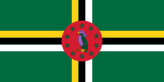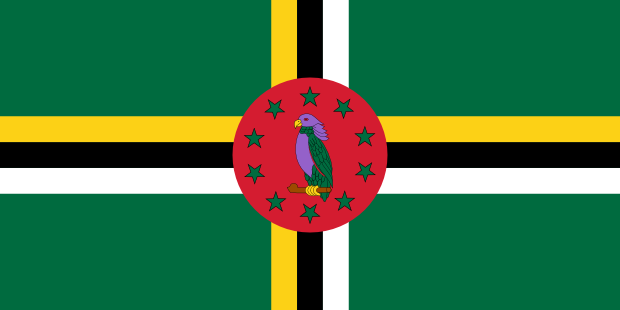
Dominica

Country flag available in this resolutions
| Icon 32x16 | ![]() |
| Icon 88x44 | ![]() |
Dominica
Dominica: Natures Island
Dominica, often dubbed „Nature’s Island,“ is a captivating gem nestled in the heart of the Caribbean Sea. This sovereign island nation, part of the Lesser Antilles archipelago, stands apart from its more developed neighbours with its untamed natural beauty, lush rainforests, and dramatic volcanic landscapes. Its relative isolation has preserved a unique ecological and cultural heritage, making it a destination for those seeking an authentic and immersive Caribbean experience away from the typical tourist crowds. The island’s moniker is no mere marketing slogan; it is a profound reflection of its essence, a place where nature reigns supreme, shaping both its physical form and the lives of its inhabitants. From the towering peaks of the Morne Trois Pitons National Park, a UNESCO World Heritage site, to the vibrant coral reefs teeming with marine life, Dominica offers a breathtaking panorama of biodiversity. The air is thick with the scent of tropical flowers and the sounds of exotic birds, creating an almost palpable connection to the natural world. This profound connection is deeply ingrained in the Dominican identity, fostering a strong sense of environmental stewardship and a way of life intrinsically linked to the rhythms of the land and sea.
The demographic landscape of Dominica is a testament to its rich and complex history, a vibrant tapestry woven from threads of indigenous heritage, European colonization, and African ancestry. The indigenous Kalinago people, descendants of the Carib peoples who once dominated the region, still maintain a proud presence on the island, particularly within their designated territory on the island’s northeast coast. This community, the last remaining indigenous tribe in the Eastern Caribbean, preserves unique traditions, languages, and a profound understanding of the island’s natural resources, offering a living link to Dominica’s pre-colonial past. The majority of Dominicans, however, are of African descent, a legacy of the transatlantic slave trade that brought enslaved Africans to the island to work on sugar plantations. This African heritage profoundly influences Dominican culture, evident in its music, dance, cuisine, and religious practices. Over centuries, intermingling with European settlers, primarily French and British, has further enriched the cultural mosaic, leading to a Creole identity that is distinctly Dominican. The official language is English, a legacy of British colonial rule, but a French-based Creole, known locally as Kwéyl, is widely spoken, particularly in rural areas, serving as a powerful symbol of cultural resilience and adaptation. The population, relatively small at just over 70,000 people, fosters a strong sense of community and interconnectedness, where family ties and social bonds are paramount. This demographic makeup creates a unique blend of traditions and perspectives, contributing to the island’s distinctive charm and character.
Economically, Dominica has historically relied on agriculture, with bananas being the primary export crop for many years. However, the island’s economy has undergone significant diversification in recent decades, driven by a growing emphasis on sustainable tourism and the development of its natural assets. While agriculture remains important, particularly for domestic consumption and niche export markets like vanilla and cocoa, the tourism sector has emerged as a crucial engine of growth. Dominica actively promotes itself as an eco-tourism destination, attracting visitors interested in hiking, diving, birdwatching, and exploring its pristine rainforests and geothermal features. This focus on nature-based tourism aligns perfectly with the island’s ecological strengths and helps to preserve its natural environment. The government has also invested in renewable energy sources, particularly geothermal power, aiming to reduce reliance on imported fossil fuels and position Dominica as a leader in sustainable energy in the Caribbean. Other sectors contributing to the economy include small-scale manufacturing, fishing, and a growing offshore financial services industry. Despite these efforts, Dominica, like many small island developing states, faces challenges such as a limited domestic market, vulnerability to natural disasters, and a reliance on external markets. However, the island’s commitment to sustainable development and its unique natural attractions provide a strong foundation for future economic prosperity.
Dominica’s geography is its most defining characteristic, a dramatic and breathtaking landscape shaped by volcanic activity and the relentless forces of nature. Situated in the Windward Islands, it is a rugged and mountainous island, characterized by a central spine of volcanic peaks, the highest of which is the Mornes Trois Pitons, reaching over 1,400 meters. These mountains are cloaked in dense, verdant rainforests, home to an astonishing array of flora and fauna, including numerous endemic species. The island’s topography is a spectacle of deep valleys, steep escarpments, and cascading waterfalls, creating a dramatic and awe-inspiring scenery. The coastline is a mix of black volcanic sand beaches and dramatic cliffs, with sheltered bays offering opportunities for diving and snorkeling in crystal-clear waters. One of Dominica’s most remarkable natural wonders is the Boiling Lake, the second-largest hot lake in the world, a fumarole located in the Morne Trois Pitons National Park, which showcases the island’s active geothermal nature. Numerous rivers and streams carve their way through the rainforests, feeding into stunning freshwater lakes and providing vital water resources for the island’s inhabitants. The rich volcanic soil supports a lush and diverse ecosystem, contributing to Dominica’s reputation as a biodiversity hotspot. This rugged terrain, while challenging for development, is precisely what makes Dominica so appealing to nature lovers and adventurers, offering a raw and untamed beauty that is increasingly rare in the modern world.
The history of Dominica is a compelling narrative of indigenous resilience, colonial struggles, and the forging of a unique national identity. For centuries before European arrival, the island was inhabited by the indigenous Kalinago people, who navigated its waters and lived in harmony with its abundant natural resources. The arrival of Christopher Columbus in 1493 marked the beginning of a turbulent era. Despite attempts by both the Spanish and later the French to colonize the island, the Kalinago fiercely resisted, and Dominica remained largely unsettled by Europeans for a considerable period. The French eventually established settlements and introduced sugar plantations, relying on enslaved African labor. Control of the island passed between the French and the British several times, a reflection of the broader colonial rivalries in the Caribbean. In 1763, Dominica was ceded to Great Britain under the Treaty of Paris. The British solidified their control, and the island became part of the British Empire. During the colonial period, the economy was dominated by sugar, coffee, and later, bananas, with the plantation system leaving a lasting impact on the island’s social and economic structure. The fight for independence gained momentum in the mid-20th century, culminating in Dominica achieving self-governance in 1978. Since independence, Dominica has focused on nation-building, developing its economy, and preserving its unique cultural and natural heritage. The historical legacy of colonialism and the struggles for freedom continue to shape the island’s identity, fostering a strong sense of pride and a deep appreciation for its hard-won sovereignty.
Information about country Dominica
Automated text translation, excuse errors, please!
Informations are from the publication CIA The World Factbook.
Country Dominica is situated in a location / continent Central America. Dominica has an area of 751 km2 and 73 126 residents. The highest point has a height 1 447 above sea level. and it is called Morne Diablatins. The lowest point is located at the level of 0 above sea level and it is named Caribbean Sea. System of government is republic and the date of independence Third November 1978. The capital city is Roseau. Dominica has the international abbreviation DO.
Dominica - economy
Total gross domestic product (GDP) is 989 500 000 $. Total gross domestic product per capita in purchasing power parity is 14 000 $. GDP grows by 0.50 % a year. Inflation (consumer price index) is equal to 3.50 % a year. Dominica have 25 000 working-age population (from a total population 73 126 people). Unemployment is at 23.00 %. Dominica issued 5.90 % GDP to healt care .The public debt of the country is 78.00 % GDP. The total amount of foreign debt is 303 000 000 USD.
Dominica - transport and telecommunications
Dominica has 780 km of roads and 2 airports. There is registered 43 ships.
Number of active mobile phones (sim card) in the country Dominica is 111 000. Number of active fixed telephone lines is 15 500. Dominica has 28 000 internet users, who have the available 722 Internet connections. Dominica has been assigned a domain first Choose range .dm.
Dominica - demography
As suggested above, Dominica has 73 126 people. Population growth is in the amount 0.22 % per year. Number of children born per 1000 population per year is 15.60.Every mother has average 2.06 children. The infant mortality rate is 12.38 .Average estimated life expectancy makes 76.18 years. Mortality is 8.03 people per 1000 population per year.
Dominica - energetics
Dominica consumes a year 79 520 000 kWh of electricity. Annual electricity production is 85 500 000 kWh in power plants with a total installed electrical capacity 22 200 kW. Dominica exports 0 kWh and imports 0 kWh of electricity per year Energy mix of power generation is as follows: fossil fuels: 72.1 %, nuclear energy: 0 %, renewable: 0.9 %, hydropower: 27.0 %.
Country flags
Flags of the world countries
Flags of the World countries
![]() |
![]() |
![]() |
![]() |
![]() |
![]() |
![]() |
![]() |
![]() |
![]() |
![]() |
![]() |
![]() |
![]() |
![]() |
![]() |
![]() |
![]() |
![]() |