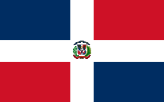
Dominican Republic
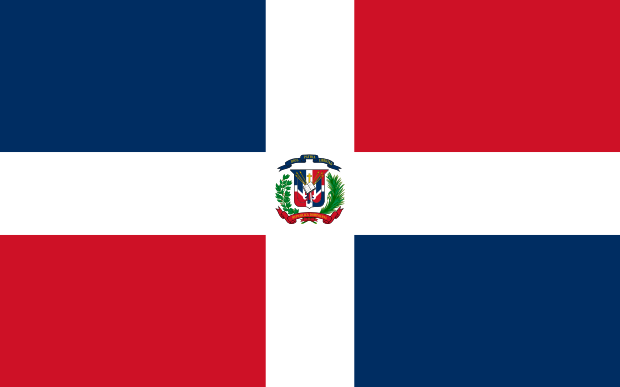
Country flag available in this resolutions
| Icon 32x20 |  |
| Icon 88x55 |  |
Dominican Republic
The Dominican Republic, a vibrant Caribbean nation occupying the eastern two-thirds of the island of Hispaniola, is a land of captivating contrasts. From its sun-drenched beaches and lush mountain ranges to its rich history and dynamic culture, the country offers a compelling tapestry of experiences. Understanding its demographic makeup, economic drivers, geographical features, and historical trajectory provides a deeper appreciation for this fascinating destination.
The demographic landscape of the Dominican Republic is a testament to its complex past and ongoing evolution. With an estimated population of over 11 million people, the nation is characterized by a youthful demographic, with a significant proportion of its citizens under the age of 25. This youthful exuberance fuels the countrys energy and contributes to its vibrant cultural scene. The ethnic composition is a fascinating blend, primarily of mixed European and African ancestry, reflecting the historical waves of colonization and the transatlantic slave trade. There are also smaller but significant populations of European descendants, particularly from Spain and Germany, and a notable presence of Haitian immigrants, who have historically played a crucial role in the agricultural sector, though their integration has often been fraught with challenges and social complexities. Spanish is the official language, a direct legacy of its colonial past, but a Creole dialect is spoken by many, particularly in border regions with Haiti. The population is predominantly Roman Catholic, a religious heritage deeply ingrained in the national identity, influencing traditions, festivals, and social norms. Urbanization has been a significant trend in recent decades, with a growing number of Dominicans migrating from rural areas to cities like Santo Domingo, Santiago, and San Pedro de Macorís in search of economic opportunities and better living standards. This demographic shift has, in turn, placed increasing demands on urban infrastructure and services, creating both opportunities and challenges for development.
Economically, the Dominican Republic has experienced considerable growth and transformation over the past few decades, moving from a primarily agrarian economy to one increasingly driven by services, particularly tourism. The tourism sector is a cornerstone of the Dominican economy, attracting millions of visitors annually with its stunning beaches, luxurious resorts, and diverse attractions. Destinations like Punta Cana, Puerto Plata, and Samaná are world-renowned for their natural beauty and hospitality, generating substantial foreign exchange earnings and creating numerous employment opportunities in hotels, restaurants, and related industries. Beyond tourism, the country has diversified its economic base. The free trade zones have become significant hubs for manufacturing, particularly in the assembly of electronics, textiles, and medical devices, contributing to exports and job creation. Remittances from Dominicans working abroad, especially in the United States and Spain, also play a vital role in the national economy, providing a crucial source of income for many families and stimulating domestic consumption. Agriculture, though less dominant than in previous eras, remains important, with exports of sugar, coffee, cocoa, and tobacco contributing to the national income. The government has been actively pursuing policies to attract foreign investment, improve infrastructure, and enhance the business environment, aiming to foster sustainable economic development and reduce poverty. However, challenges persist, including income inequality, reliance on imported goods, and the need for continued investment in education and skills development to ensure long-term competitiveness.
Geographically, the Dominican Republic is a land of remarkable diversity and breathtaking natural beauty. Occupying the eastern two-thirds of the island of Hispaniola, it shares its western border with Haiti. The country boasts a varied topography, ranging from the fertile Cibao Valley, the nations agricultural heartland, to the towering peaks of the Cordillera Central, the highest mountain range in the Caribbean. Pico Duarte, its highest point, reaches an impressive elevation of over 3,000 meters, offering a stark contrast to the tropical coastal plains. The coastline is a magnificent stretch of white-sand beaches, crystal-clear turquoise waters, and vibrant coral reefs, making it an idyllic destination for beach lovers and water sports enthusiasts. The country is dotted with numerous rivers, lakes, and waterfalls, adding to its natural allure. The climate is tropical maritime, characterized by warm temperatures year-round and distinct wet and dry seasons. The hurricane season, typically from June to November, can bring significant weather events, necessitating preparedness and resilience. The diverse ecosystems support a rich biodiversity, with numerous endemic species of plants and animals, particularly in its national parks and protected areas. The islands strategic location in the Caribbean has also historically made it a point of interest and a gateway to the Americas, influencing its development and interactions with other nations.
The history of the Dominican Republic is a captivating narrative of exploration, colonization, independence struggles, and periods of political instability. Christopher Columbus first landed on Hispaniola in 1492, marking the beginning of European settlement in the Americas. The island, named La Espaola, became the first permanent European settlement in the New World. For centuries, it was a Spanish colony, experiencing the imposition of Spanish language, culture, and religion. The indigenous Taíno population, however, was decimated by disease and exploitation, a tragic chapter in the islands history. In the 17th century, France established a presence on the western part of the island, which eventually became Haiti. After a period of Haitian occupation, the Dominican Republic declared its independence from Haiti in 1844, led by national heroes like Juan Pablo Duarte, Francisco del Rosario Sánchez, and Matías Ramón Mella. The ensuing decades were marked by political turmoil, coups, and foreign interventions, including a period of U.S. occupation from 1916 to 1924. The mid-20th century saw the rise of Rafael Trujillo, a dictator whose iron-fisted rule lasted for over three decades, leaving a complex legacy of both modernization and severe human rights abuses. Following Trujillos assassination in 1961, the country embarked on a path towards democracy, though it has faced its share of political challenges and economic fluctuations. Today, the Dominican Republic stands as a sovereign nation, striving to build on its rich heritage and overcome the lingering effects of its historical experiences, while embracing its future with optimism and resilience.
Information about country Dominican Republic
Automated text translation, excuse errors, please!
Informations are from the publication CIA The World Factbook.
Country Dominican Republic is situated in a location / continent Central America. Dominican Republic has an area of 48 670 km2 and 10 088 598 residents. The highest point has a height 3 175 above sea level. and it is called Pico Duarte. The lowest point is located at the level of -46 above sea level and it is named Lago Enriquillo. System of government is republic and the date of independence 27th February 1844. The capital city is Santo Domingo. Dominican Republic has the international abbreviation DR.
Dominican Republic - economy
Total gross domestic product (GDP) is 94 580 000 000 $. Total gross domestic product per capita in purchasing power parity is 9 400 $. GDP grows by 4.50 % a year. Inflation (consumer price index) is equal to 8.50 % a year. Dominican Republic have 4 732 000 working-age population (from a total population 10 088 598 people). Unemployment is at 13.10 %. Dominican Republic issued 6.10 % GDP to healt care .The public debt of the country is 36.00 % GDP. The total amount of foreign debt is 14 420 000 000 USD.
Dominican Republic - transport and telecommunications
Dominican Republic has 19 705 km of roads, 142 km of railway lines and 36 airports.
Number of active mobile phones (sim card) in the country Dominican Republic is 8 771 000. Number of active fixed telephone lines is 1 044 000. Dominican Republic has 2 701 000 internet users, who have the available 404 057 Internet connections. Dominican Republic has been assigned a domain first Choose range .do.
Dominican Republic - demography
As suggested above, Dominican Republic has 10 088 598 people. Population growth is in the amount 1.31 % per year. Number of children born per 1000 population per year is 19.44.Every mother has average 2.41 children. The infant mortality rate is 21.30 and maternal mortality 150.00 deaths per 100,000 births. Average estimated life expectancy makes 77.44 years. Mortality is 4.41 people per 1000 population per year.
Dominican Republic - energetics
Dominican Republic consumes a year 9 881 000 000 kWh of electricity. Annual electricity production is 12 300 000 000 kWh in power plants with a total installed electrical capacity 2 973 000 kW. Dominican Republic exports 0 kWh and imports 0 kWh of electricity per year Energy mix of power generation is as follows: fossil fuels: 83 %, nuclear energy: 0 %, renewable: 0.3 %, hydropower: 16.6 %.
Country flags
Flags of the world countries
Flags of the World countries
Dále doporučujeme:
Zajímavé linky na nejrůznější webyDoporučené odkazy a zdroje obsahu
Zajímavé internetové odkazy
Partnerské internetové stránky
Odkazy na užitečné webové stránky
 |
 |
 |
 |
 |
 |
 |
 |
 |
 |
 |
 |
 |
 |
 |
 |
 |
 |
 |