Ecuador
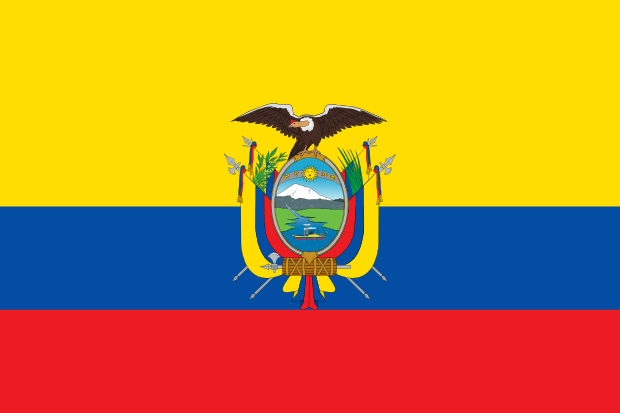
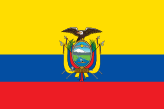
Country flag available in this resolutions
| Icon 32x21 |  |
| Icon 88x59 |  |
Ecuador
Ecuador: A Land of Remarkable Diversity
Ecuador, officially the Republic of Ecuador, is a South American nation situated on the equator, a fact that lends it its very name and hints at the incredible climatic and geographical diversity packed within its relatively small borders. Bordered by Colombia to the north, Peru to the east and south, and the Pacific Ocean to the west, Ecuador is a country that defies easy categorization. Its territory encompasses three distinct geographical regions: the coastal lowlands known as the Costa, the Andean highlands or Sierra, and the Amazon rainforest or Oriente. Beyond the mainland, Ecuador also boasts the renowned Galápagos Islands, an archipelago of volcanic islands located about 1,000 kilometers off the coast, famous for their unique endemic wildlife that inspired Charles Darwin’s theory of evolution. This geographical mosaic creates a tapestry of landscapes, from lush tropical beaches and fertile agricultural valleys to towering volcanic peaks and dense, biodiverse rainforests. The country’s rich natural resources have played a significant role in its history and economy, though they have also presented challenges in terms of conservation and equitable distribution.
The demographic landscape of Ecuador is as varied as its geography, a testament to centuries of indigenous cultures, European colonization, and subsequent waves of migration. The population is a vibrant mix, predominantly mestizo, meaning individuals of mixed European and indigenous ancestry. Significant indigenous populations, representing diverse ethnic groups such as the Quichua, Shuar, and Waorani, maintain their distinct cultural traditions, languages, and ways of life, particularly in the Andean and Amazonian regions. A smaller but influential Afro-Ecuadorian population resides primarily along the coast, contributing to the nation’s rich cultural heritage. The official language is Spanish, but many indigenous languages, most notably Kichwa (a dialect of Quechua), are still spoken. The country’s population is predominantly Roman Catholic, reflecting its Spanish colonial past, though other Christian denominations and indigenous spiritual beliefs are also present. Urbanization has been a significant trend, with a large proportion of Ecuadorians now living in cities, the largest and most influential being the capital, Quito, nestled high in the Andes, and the bustling port city of Guayaquil on the coast. This demographic blend fosters a dynamic cultural environment, evident in its music, art, cuisine, and festivals.
Historically, the territory that is now Ecuador has been inhabited for millennia by various indigenous peoples. The most prominent of these were the Inca, who established a vast empire that extended into this region. The Inca Empire, however, was eventually conquered by the Spanish conquistadors in the 16th century, marking the beginning of colonial rule. Ecuador, then known as the Royal Audience of Quito, was part of the Viceroyalty of Peru and later the Viceroyalty of New Granada. The struggle for independence from Spain was a protracted affair, culminating in the Battle of Pichincha in 1822, which secured Ecuador’s liberation. Following independence, Ecuador experienced a period of political instability, characterized by frequent changes in government and civil unrest. The 19th and 20th centuries saw periods of both democratic rule and authoritarianism, often influenced by economic fluctuations and regional power struggles. The discovery of oil in the late 1960s brought about significant economic changes, leading to both prosperity and increased dependence on global commodity markets. More recently, Ecuador has navigated complex political landscapes, striving for economic development while also grappling with social inequalities and environmental preservation.
Economically, Ecuador’s fortunes have been closely tied to its natural resources. Historically, agriculture was the backbone of the economy, with products like bananas, coffee, cocoa, and shrimp being major exports. Ecuador is, in fact, the world’s largest exporter of bananas, a fact that has profoundly shaped its coastal economy and international trade relationships. The discovery and exploitation of oil in the latter half of the 20th century transformed the economic landscape, providing a significant source of revenue for the government. However, this reliance on oil also makes the economy vulnerable to fluctuations in global oil prices, leading to periods of boom and bust. In recent decades, Ecuador has sought to diversify its economy, focusing on sectors such as tourism, particularly linked to the Galápagos Islands and its diverse natural attractions, and manufacturing. The country adopted the US dollar as its official currency in 2000, a move aimed at stabilizing the economy and controlling inflation after a period of hyperinflation and currency devaluation. Despite progress, challenges remain, including poverty, income inequality, and the need for continued investment in infrastructure and education to foster sustainable growth and reduce dependence on volatile commodity markets. The informal sector also plays a significant role in the economy, providing employment for a considerable portion of the population.
Geographically, Ecuador is a land of striking contrasts. The Costa, the western region, is characterized by a warm, humid climate and fertile plains, ideal for agriculture. This is where the majority of the country’s banana plantations are located, along with other tropical crops. Major cities like Guayaquil, the economic powerhouse, and Manta, a significant port, are situated here. Moving inland, the Sierra rises dramatically, forming part of the Andes mountain range. This region is home to some of the world’s highest volcanoes, including Cotopaxi, an active stratovolcano that is an iconic symbol of Ecuador. The Sierra’s valleys are fertile, supporting agriculture, and it is also the historical heartland of indigenous cultures and the colonial capital, Quito. The climate here is temperate, with distinct wet and dry seasons, and the altitude can be challenging for those unaccustomed to it. Further east lies the Oriente, the vast expanse of the Amazon rainforest. This region is characterized by its immense biodiversity, with dense tropical forests, winding rivers, and a rich array of flora and fauna. It is home to numerous indigenous communities who live in harmony with the rainforest. The Oriente is also a significant source of oil, though its exploitation poses environmental challenges. Finally, the Galápagos Islands, a UNESCO World Heritage site, are a unique ecological laboratory. Their isolation has led to the evolution of species found nowhere else on Earth, making them a prime destination for ecotourism and scientific research. The extreme geographical variation within Ecuador contributes significantly to its biodiversity and presents unique challenges for infrastructure development and inter-regional connectivity.
Information about country Ecuador
Automated text translation, excuse errors, please!
Informations are from the publication CIA The World Factbook.
Country Ecuador is situated in a location / continent South America. Ecuador has an area of 283 561 km2 and 15 223 680 residents. The highest point has a height 6 267 above sea level. and it is called Chimborazo. The lowest point is located at the level of 0 above sea level and it is named Pacific Ocean. System of government is republic and the date of independence 24th May 1822. The capital city is Quito. Ecuador has the international abbreviation EC.
Ecuador - economy
Total gross domestic product (GDP) is 129 100 000 000 $. Total gross domestic product per capita in purchasing power parity is 8 600 $. GDP grows by 7.80 % a year. Inflation (consumer price index) is equal to 4.50 % a year. Ecuador have 4 682 000 working-age population (from a total population 15 223 680 people). Unemployment is at 4.20 %. Ecuador issued 5.00 % GDP to healt care and 0,90 % GDP to army. The public debt of the country is 22.10 % GDP. The total amount of foreign debt is 10 050 000 000 USD.
Ecuador - transport and telecommunications
Ecuador has 43 670 km of roads, 965 km of railway lines and 431 airports. The total length of waterways (navigable rivers, canals, etc.) is 1 500 km. There is registered 44 ships.
Number of active mobile phones (sim card) in the country Ecuador is 15 333 000. Number of active fixed telephone lines is 2 211 000. Ecuador has 3 352 000 internet users, who have the available 162 281 Internet connections. Ecuador has been assigned a domain first Choose range .ec.
Ecuador - demography
As suggested above, Ecuador has 15 223 680 people. Population growth is in the amount 1.42 % per year. Number of children born per 1000 population per year is 19.60.Every mother has average 2.38 children. The infant mortality rate is 19.06 and maternal mortality 110.00 deaths per 100,000 births. Average estimated life expectancy makes 75.94 years. Mortality is 5.01 people per 1000 population per year.
Ecuador - energetics
Ecuador consumes a year 14 920 000 000 kWh of electricity. Annual electricity production is 16 880 000 000 kWh in power plants with a total installed electrical capacity 4 939 000 kW. Ecuador exports 14 100 000 kWh and imports 1 300 000 000 kWh of electricity per year Energy mix of power generation is as follows: fossil fuels: 56.2 %, nuclear energy: 0 %, renewable: 2.1 %, hydropower: 41.7 %. The country Ecuador is harvested annually 500 700 barrels of oil.
Country flags
Flags of the world countries
Flags of the World countries
Dále doporučujeme:
Odkazy nejen na naše partnerské webyZajímavé linky na nejrůznější weby
Naše tipy na zajímavé stránky
Tipy na zajímavé weby
Zajímavé webové stránky
 |
 |
 |
 |
 |
 |
 |
 |
 |
 |
 |
 |
 |
 |
 |
 |
 |
 |
 |