El Salvador
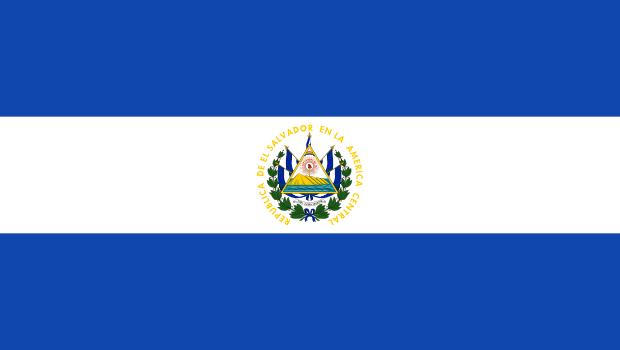
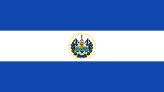
Country flag available in this resolutions
| Icon 32x18 |  |
| Icon 88x50 |  |
El Salvador
El Salvador: A Land of Volcanoes, History, and Resilience
El Salvador, the smallest nation in Central America, is a country of dramatic contrasts, marked by a rugged volcanic landscape, a rich and often turbulent history, and a spirit of resilience that defines its people. Nestled along the Pacific coast, it shares borders with Guatemala to the west and Honduras to the north and east. Despite its diminutive size, El Salvador possesses a unique cultural identity and a growing presence on the global stage. The nation’s geography is dominated by a central plateau, flanked by coastal lowlands and a chain of volcanoes, some of which remain active, adding a constant sense of dynamism to the environment. This volcanic origin has blessed El Salvador with fertile soil, ideal for agriculture, and has also shaped its dramatic scenery, with numerous lakes and rivers dotting the landscape. The Pacific coastline, though relatively short, offers beautiful beaches, popular with both locals and tourists alike for surfing and relaxation. However, this same geological activity also presents challenges, with the country being susceptible to earthquakes and volcanic eruptions, a constant reminder of the powerful forces that shaped this land.
The demographic tapestry of El Salvador is woven from a predominantly mestizo population, a blend of indigenous and European heritage. This fusion has created a vibrant culture, evident in its music, dance, art, and cuisine. The official language is Spanish, though a small indigenous minority still speaks Nahuatl, a testament to the country’s pre-Columbian roots. The population is relatively young, with a significant proportion under the age of 30, presenting both opportunities and challenges for future development. Historically, El Salvador has experienced significant emigration, with a large Salvadoran diaspora residing in countries like the United States, Canada, and Mexico. This outward migration has been driven by a complex mix of economic hardship, political instability, and, in the past, civil conflict. Despite these challenges, the Salvadoran people are known for their warmth, hospitality, and strong sense of community. Family ties are deeply important, and traditional values continue to play a significant role in social structures. The nation’s capital, San Salvador, is a bustling metropolis, the economic and cultural heart of the country, where the modern and the traditional coexist.
El Salvador’s economy has undergone significant transformations throughout its history. Traditionally, it was heavily reliant on agriculture, with coffee being the dominant export crop for many decades. The fertile volcanic soils provided an excellent environment for coffee cultivation, and the country established itself as a significant producer on the international market. However, fluctuating global coffee prices and the impacts of climate change have necessitated a diversification of the economy. In recent years, remittances from Salvadorans living abroad have become a crucial source of income, providing vital support for families and contributing significantly to the national GDP. The service sector, particularly tourism, is also on the rise, with the country’s natural beauty and historical sites attracting increasing numbers of visitors. El Salvador has also been actively working to attract foreign investment, particularly in manufacturing and technology, aiming to create more employment opportunities and foster economic growth. The adoption of the US dollar as its official currency in 2001, replacing the Salvadoran Colón, was a significant economic policy aimed at stabilizing the economy and facilitating international trade. While challenges remain, including issues of poverty and inequality, the nation is striving to build a more robust and diversified economy for the future.
The history of El Salvador is a narrative of both indigenous grandeur and colonial imposition, followed by a long struggle for independence and periods of significant social and political upheaval. Before the arrival of the Spanish in the 16th century, the territory was inhabited by various indigenous peoples, most notably the Pipil, who had established a sophisticated civilization. The Spanish conquest brought an end to indigenous rule, and El Salvador became a part of the Captaincy General of Guatemala, under Spanish colonial administration. The struggle for independence from Spain began in the early 19th century, and El Salvador finally declared its sovereignty in 1821, albeit briefly becoming part of the First Mexican Empire and then the Federal Republic of Central America. Following the dissolution of the federation, El Salvador emerged as an independent republic. The late 19th and early 20th centuries were characterized by a series of oligarchic governments, often dominated by powerful landowning families, with coffee production increasingly shaping the nation’s economic and social landscape. This period also saw growing social inequalities, which would eventually contribute to the nation’s more turbulent later history.
The mid-to-late 20th century was a particularly challenging era for El Salvador, marked by political instability and a brutal civil war. Growing social unrest, fueled by economic disparities and authoritarian rule, erupted into a full-blown civil conflict in the early 1980s. The war pitted the U.S.-backed government forces against leftist guerrilla groups, resulting in immense human suffering, widespread displacement, and devastating economic damage. The conflict lasted for over a decade, leaving an indelible scar on the nation’s psyche and society. A peace accord was finally signed in 1992, bringing an end to the fighting and ushering in a new era of democratic transition. The post-war period has been dedicated to rebuilding the country, fostering reconciliation, and addressing the lingering effects of the conflict. This has involved significant reforms in areas such as security, justice, and social development. Despite the progress made, the legacy of the civil war continues to influence Salvadoran society, and the nation still grapples with issues of violence and insecurity, though significant efforts are being made to overcome these challenges and build a more peaceful and prosperous future for all its citizens. El Salvador’s journey is a testament to the enduring strength and determination of its people in the face of adversity.
Information about country El Salvador
Automated text translation, excuse errors, please!
Informations are from the publication CIA The World Factbook.
Country El Salvador is situated in a location / continent Central America. El Salvador has an area of 21 041 km2 and 6 090 646 residents. The highest point has a height 2 730 above sea level. and it is called Cerro El Pital. The lowest point is located at the level of 0 above sea level and it is named Pacific Ocean. System of government is republic and the date of independence 15th September 1821. The capital city is San Salvador. El Salvador has the international abbreviation ES.
El Salvador - economy
Total gross domestic product (GDP) is 45 150 000 000 $. Total gross domestic product per capita in purchasing power parity is 7 600 $. GDP grows by 1.40 % a year. Inflation (consumer price index) is equal to 5.10 % a year. El Salvador have 2 577 000 working-age population (from a total population 6 090 646 people). Unemployment is at 7.00 %. El Salvador issued 3.90 % GDP to healt care .The public debt of the country is 57.30 % GDP. The total amount of foreign debt is 12 950 000 000 USD.
El Salvador - transport and telecommunications
El Salvador has 10 886 km of roads, 283 km of railway lines and 65 airports.
Number of active mobile phones (sim card) in the country El Salvador is 7 837 000. Number of active fixed telephone lines is 950 000. El Salvador has 746 000 internet users, who have the available 22 372 Internet connections. El Salvador has been assigned a domain first Choose range .sv.
El Salvador - demography
As suggested above, El Salvador has 6 090 646 people. Population growth is in the amount 0.30 % per year. Number of children born per 1000 population per year is 17.44.Every mother has average 2.04 children. The infant mortality rate is 19.66 and maternal mortality 81.00 deaths per 100,000 births. Average estimated life expectancy makes 73.69 years. Mortality is 5.63 people per 1000 population per year.
El Salvador - energetics
El Salvador consumes a year 5 756 000 000 kWh of electricity. Annual electricity production is 5 728 000 000 kWh in power plants with a total installed electrical capacity 1 501 000 kW. El Salvador exports 101 600 000 kWh and imports 215 800 000 kWh of electricity per year Energy mix of power generation is as follows: fossil fuels: 53 %, nuclear energy: 0 %, renewable: 15.6 %, hydropower: 31.4 %.
Country flags
Flags of the world countries
Flags of the World countries
Dále doporučujeme:
Naše tipy na zajímavé stránkyTipy na užitečné weby
Odkazy nejen na naše partnerské weby
Partnerské internetové stránky
Odkazy na zajímavé weby
 |
 |
 |
 |
 |
 |
 |
 |
 |
 |
 |
 |
 |
 |
 |
 |
 |
 |
 |