Ethiopia

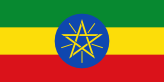
Country flag available in this resolutions
| Icon 32x16 |  |
| Icon 88x44 |  |
Ethiopia
Ethiopia: A Tapestry of History, Culture, and Resilience
Ethiopia, a landlocked nation nestled in the Horn of Africa, stands as a testament to ancient civilizations, rich cultural heritage, and remarkable resilience in the face of adversity. Its history stretches back millennia, making it one of the oldest continuously inhabited countries in the world. Geographically, Ethiopia is a land of dramatic contrasts, from the rugged highlands that cradle its ancient cities to the vast arid plains and fertile river valleys. This diverse topography has shaped its history, its people, and its economic potential, creating a unique tapestry that continues to captivate and intrigue.
The demographic landscape of Ethiopia is as varied as its terrain. With a population exceeding 110 million people, it is the second most populous nation in Africa. This vast populace is a mosaic of ethnic groups, each with its own distinct language, customs, and traditions. The Oromo, Amhara, Somali, and Tigrayans are among the largest ethnic groups, but hundreds of other smaller communities contribute to the nation’s vibrant cultural mosaic. This diversity, while a source of strength and richness, has also, at times, been a point of tension, leading to historical conflicts and ongoing challenges in fostering national unity. The official language is Amharic, but Oromo, Tigrinya, and Somali are widely spoken, alongside numerous other indigenous languages. Christianity, particularly Ethiopian Orthodox Christianity, and Islam are the dominant religions, coexisting for centuries and deeply interwoven into the fabric of Ethiopian society and its historical narrative. The youth demographic is substantial, presenting both opportunities for growth and challenges in terms of employment and development.
Ethiopia’s economy is undergoing a significant transformation. Historically, it has been heavily reliant on agriculture, which still employs the majority of the population and contributes a substantial portion to the GDP. Coffee, Ethiopia’s most famous export, is grown in the fertile highlands and is renowned globally for its quality. Other significant agricultural products include cereals, pulses, oilseeds, and livestock. However, the nation is actively pursuing a strategy of industrialization and economic diversification. The government has invested heavily in infrastructure, including roads, railways, and hydroelectric power projects, aiming to attract foreign investment and boost manufacturing. Sectors like textiles, leather goods, and pharmaceuticals are showing promising growth. Despite these advancements, Ethiopia faces considerable economic hurdles, including poverty, food insecurity, and vulnerability to climate change impacts on its agricultural sector. The ongoing efforts to build a more robust and diversified economy are crucial for lifting millions out of poverty and ensuring sustainable development.
The geography of Ethiopia is remarkably diverse and plays a pivotal role in its history and development. The country is dominated by the Ethiopian Highlands, a rugged mass of mountains that rise to considerable altitudes, forming the backbone of the nation. Within these highlands lie fertile plateaus, deep valleys, and dramatic escarpments. The Great Rift Valley, a colossal geological feature that stretches across East Africa, bisects Ethiopia, creating a series of lakes, volcanoes, and fertile depressions. To the east of the highlands lie the arid lowlands, including the Danakil Depression, one of the hottest and lowest places on Earth, known for its surreal landscapes and extreme conditions. The western parts of the country are characterized by vast savannas and fertile river valleys, including the Blue Nile, which originates in Ethiopia and is a vital source of water for downstream nations. This varied topography influences climate, biodiversity, and the distribution of its population, while also presenting significant challenges for transportation and infrastructure development.
Ethiopia’s history is an epic saga, marked by periods of great power, cultural flourishing, and profound challenges. It is the cradle of some of the earliest human ancestors, with fossil discoveries like Lucy (Australopithecus afarensis) dating back millions of years. The Aksumite Kingdom, which flourished from the 1st to the 8th centuries CE, was a major trading power with its own script, currency, and monumental architecture, including the famous obelisks. Christianity was introduced to Ethiopia in the 4th century CE, becoming deeply ingrained in its national identity, and leading to the development of a unique liturgical tradition and a rich artistic heritage. For centuries, Ethiopia remained an independent empire, resisting European colonial powers, most notably defeating the Italians at the Battle of Adwa in 1896, a victory that became a symbol of African resistance. The 20th century brought significant political upheaval, including the rule of Emperor Haile Selassie, followed by the Marxist Derg regime, which led to widespread repression and famine. The Ethiopian Peoples Revolutionary Democratic Front (EPRDF) came to power in 1991, ushering in a period of relative stability and economic growth, though also marked by ethnic tensions and political challenges. The recent period has seen further political shifts and ongoing conflicts, highlighting the persistent need for peace and reconciliation.
Ethiopias cultural heritage is as ancient and diverse as its history. Its unique alphabet, Geez, is still used for liturgical purposes and is the ancestor of several modern Ethiopian languages. Ethiopian art, characterized by vibrant colors and intricate religious iconography, has a long and distinguished tradition. Ethiopian music, with its distinctive rhythms and melodies, is a vital part of cultural expression. The cuisine, famous for its injera (a sourdough flatbread) and flavorful stews (wats), is a culinary cornerstone. Ethiopian coffee ceremonies are a deeply social and cultural ritual, reflecting the nations status as the birthplace of coffee. The country boasts numerous UNESCO World Heritage Sites, including the rock-hewn churches of Lalibela, the ancient city of Aksum, and the walled city of Harar, each offering a glimpse into its rich past. This enduring cultural legacy is a source of national pride and a significant draw for tourism, contributing to the nations identity and its place on the global stage.
Information about country Ethiopia
Automated text translation, excuse errors, please!
Informations are from the publication CIA The World Factbook.
Country Ethiopia is situated in a location / continent Africa. Ethiopia has an area of 1 104 300 km2 and 91 195 675 residents. The highest point has a height 4 533 above sea level. and it is called Ras Dejen. The lowest point is located at the level of -125 above sea level and it is named Danakil Depression. System of government is Federal Republic.The capital city is Addis Ababa. Ethiopia has the international abbreviation ET.
Ethiopia - economy
Total gross domestic product (GDP) is 96 090 000 000 $. Total gross domestic product per capita in purchasing power parity is 1 100 $. GDP grows by 7.50 % a year. Inflation (consumer price index) is equal to 33.20 % a year. Ethiopia have 37 900 000 working-age population (from a total population 91 195 675 people). Ethiopia issued 3.60 % GDP to healt care and 1,20 % GDP to army. The public debt of the country is 43.70 % GDP. The total amount of foreign debt is 7 989 000 000 USD.
Ethiopia - transport and telecommunications
Ethiopia has 36 469 km of roads, 681 km of railway lines and 58 airports. There is registered 8 ships.
Number of active mobile phones (sim card) in the country Ethiopia is 14 127 000. Number of active fixed telephone lines is 829 000. Ethiopia has 447 300 internet users, who have the available 167 Internet connections. Ethiopia has been assigned a domain first Choose range .et.
Ethiopia - demography
As suggested above, Ethiopia has 91 195 675 people. Population growth is in the amount 3.18 % per year. Number of children born per 1000 population per year is 42.59.Every mother has average 5.39 children. The infant mortality rate is 75.29 and maternal mortality 350.00 deaths per 100,000 births. Average estimated life expectancy makes 56.56 years. Mortality is 10.79 people per 1000 population per year.
Ethiopia - energetics
Ethiopia consumes a year 3 648 000 000 kWh of electricity. Annual electricity production is 4 039 000 000 kWh in power plants with a total installed electrical capacity 1 180 000 kW. Ethiopia exports 0 kWh and imports 0 kWh of electricity per year Energy mix of power generation is as follows: fossil fuels: 17.2 %, nuclear energy: 0 %, renewable: 0.6 %, hydropower: 82.1 %.
Country flags
Flags of the world countries
Flags of the World countries
Dále doporučujeme:
Naše tipy na užitečné webyZajímavé webové stránky
Tipy na Partnerské weby
Zajímavé internetové odkazy
Zajímavé linky na nejrůznější weby
 |
 |
 |
 |
 |
 |
 |
 |
 |
 |
 |
 |
 |
 |
 |
 |
 |
 |
 |