European Union
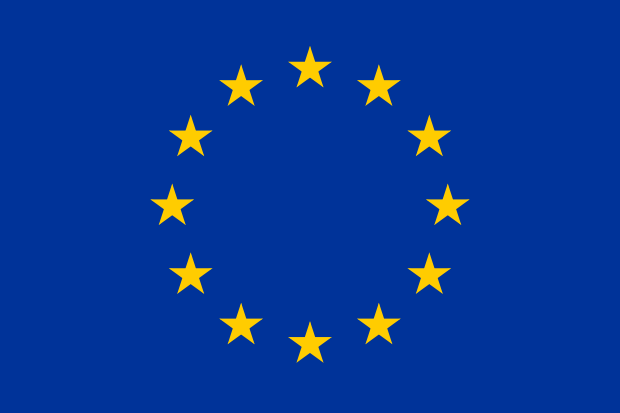
Country flag available in this resolutions
| Icon 32x21 |  |
| Icon 88x59 |  |
European Union
The European Union: A Continent United, A Power Ascendant
The European Union (EU) stands as a unique and ambitious political and economic partnership, a testament to the enduring desire for peace, prosperity, and cooperation among European nations in the aftermath of devastating conflicts. What began as a modest coal and steel community in the mid-20th century has evolved into a supranational organization encompassing 27 member states, shaping the lives of over 450 million citizens and wielding significant influence on the global stage. Its multifaceted nature, encompassing economic integration, political dialogue, and shared values, makes it a compelling subject of study, from its diverse geography and burgeoning demographics to its robust economy and rich, often tumultuous, history.
Geographically, the European Union sprawls across a vast and varied landscape, encompassing the westernmost reaches of the European continent and extending into its eastern territories. From the rugged coastlines of Ireland and Portugal to the vast plains of Poland and the mountainous terrain of the Alps, the EUs geography is as diverse as its people. This geographical diversity has historically fostered distinct cultural identities and economic specializations, yet the EUs overarching aim has been to bridge these differences through increased connectivity and shared infrastructure. The presence of numerous coastlines grants member states access to vital maritime trade routes, while extensive river systems and a well-developed network of roads and railways facilitate internal trade and transportation. The varying climates, from the Mediterranean warmth of Southern Europe to the more temperate conditions of the North, influence agricultural output and tourism, contributing to the economic mosaic of the Union. Furthermore, the EU’s territorial expanse includes numerous islands, overseas territories, and regions with unique geographical challenges, all of which are integrated into the Union’s policies and development strategies. The continent’s central location in global trade flows and its historical role as a crossroads of civilizations have profoundly shaped its development and its current standing in the world.
The demographic landscape of the European Union is characterized by a complex interplay of aging populations, diverse ethnic backgrounds, and ongoing migration patterns. While the total population of the EU is substantial, many member states are grappling with declining birth rates and an increasing life expectancy, leading to an aging workforce and a growing dependency ratio. This demographic shift presents significant challenges for pension systems, healthcare provision, and economic growth. However, the EU also benefits from a rich tapestry of cultures and nationalities, a legacy of centuries of migration and interaction. While the majority of the population identifies as ethnically European, there are significant minority groups and a growing influx of individuals from outside the EU, seeking economic opportunities, asylum, or reunification with family. This diversity, while enriching, also necessitates careful management of social integration, cultural understanding, and the promotion of shared European values. The free movement of people within the EU, a cornerstone of its integration, further contributes to this dynamic demographic environment, allowing citizens to live, work, and study in any member state. Nevertheless, debates surrounding immigration, integration, and national identity remain prominent within the Union, reflecting the ongoing process of shaping a cohesive, yet diverse, European society. The demographic future of the EU will undoubtedly be shaped by its ability to address these challenges and harness the opportunities presented by its diverse and evolving population.
Economically, the European Union represents one of the worlds largest and most integrated single markets. The abolition of tariffs and other trade barriers, coupled with the establishment of a common currency, the Euro, for many member states, has fostered unprecedented levels of cross-border trade and investment. This economic integration has led to increased competition, greater efficiency, and a wider range of choices for consumers. The EUs economy is characterized by a strong emphasis on services, advanced manufacturing, and technological innovation. Key sectors include automotive, aerospace, pharmaceuticals, and financial services. The Union also plays a significant role in global trade, with its combined economic output making it a major player in international commerce. However, the EU economy is not monolithic. Significant disparities exist between member states, with some economies being significantly more prosperous and diversified than others. The Eurozone crisis of the late 2000s and early 2010s highlighted these vulnerabilities and led to the implementation of new fiscal and economic governance mechanisms. The EUs commitment to sustainable development and the green transition is also increasingly shaping its economic policies, with significant investments being made in renewable energy and environmentally friendly technologies. The pursuit of economic convergence and the reduction of regional inequalities remain ongoing priorities for the Union, aiming to ensure that the benefits of integration are shared more broadly across all member states.
The history of the European Union is a narrative of overcoming deep-seated animosities and forging a path towards lasting peace and cooperation. Its origins can be traced back to the fervent desire to prevent another devastating war in Europe after World War II. The European Coal and Steel Community (ECSC), established in 1951 by six founding members (Belgium, France, Germany, Italy, Luxembourg, and the Netherlands), was a groundbreaking initiative aimed at pooling vital industrial resources and fostering economic interdependence, thereby making war between member states “materially impossible.” This initial success paved the way for the Treaty of Rome in 1957, which created the European Economic Community (EEC) and the European Atomic Energy Community (EAEC), expanding the scope of cooperation to include a common market and nuclear energy. Over the subsequent decades, the EEC evolved through successive treaties, gradually deepening integration and expanding its membership. The Maastricht Treaty in 1992 was a pivotal moment, officially establishing the European Union and laying the groundwork for the single currency, the Euro, and common policies in areas such as justice and home affairs, and foreign and security policy. The fall of the Berlin Wall and the end of the Cold War in the late 20th century opened the door for the accession of many Central and Eastern European countries, significantly expanding the Unions geographical and demographic reach. The EU has weathered numerous challenges throughout its history, from economic crises and political disagreements to the complexities of enlargement and the ongoing debate about its future direction. The process of European integration has been a continuous evolution, marked by periods of rapid progress and moments of introspection, but always driven by the core aspiration of building a more united, prosperous, and peaceful Europe.
Information about country European Union
Automated text translation, excuse errors, please!
Informations are from the publication CIA The World Factbook.
Country European Union is situated in a location / continent Europe. The highest point has a height 4 807 above sea level. and it is called Mont Blanc. The lowest point is located at the level of -7 above sea level and it is named Lammefjord, Denmark. and the date of independence 7th February 1992. The capital city is Brussels (Belgium), Strasbourg (France), Luxembourg. European Union has the international abbreviation EE.
European Union - economy
Total gross domestic product (GDP) is 15 650 000 000 000 $. Total gross domestic product per capita in purchasing power parity is 34 500 $. GDP grows by 1.60 % a year. Inflation (consumer price index) is equal to 3.00 % a year. European Union have 228 400 000 working-age population (from a total population people). Unemployment is at 9.50 %. The total amount of foreign debt is 16 080 000 000 000 USD.
European Union - transport and telecommunications
.
European Union has been assigned a domain first Choose range .eu.
European Union - demography
The infant mortality rate is 4.49 .Average estimated life expectancy makes 79.76 years.
European Union - energetics
European Union consumes a year 3 037 000 000 000 kWh of electricity. Annual electricity production is 3 345 000 000 000 kWh ..
Country flags
Flags of the world countries
Flags of the World countries
Dále doporučujeme:
Naše tipy na užitečné webyDoporučené odkazy
Doporučené odkazy a zdroje obsahu
Tipy na užitečné weby
Doporučené odkazy na zajímavé weby
 |
 |
 |
 |
 |
 |
 |
 |
 |
 |
 |
 |
 |
 |
 |
 |
 |
 |
 |