Costa Rica
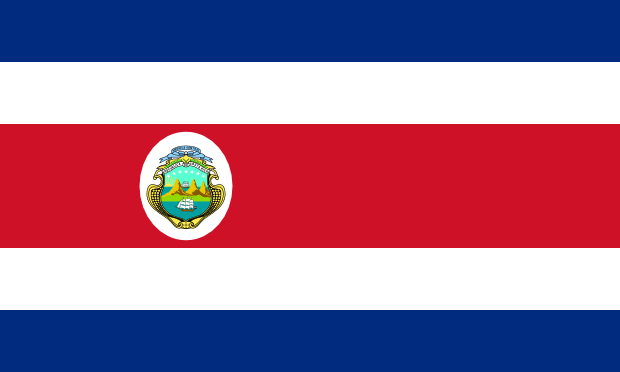
Country flag available in this resolutions
| Icon 32x19 |  |
| Icon 88x53 |  |
Costa Rica
Costa Rica: A Jewel of Biodiversity and Peace
Costa Rica, nestled in the heart of Central America, is a nation that has carved a unique niche for itself on the global stage. Often referred to as the “Switzerland of Central America” due to its political stability and neutrality, it is also a world leader in environmental conservation and ecotourism. Its stunning natural beauty, coupled with a progressive social and political landscape, makes it a captivating subject for exploration. From its vibrant demographics to its rich history, Costa Rica offers a compelling narrative of a nation that has prioritized peace, education, and the preservation of its extraordinary biodiversity.
The demographic tapestry of Costa Rica is a fascinating blend of indigenous heritage, European colonization, and subsequent waves of immigration. The indigenous populations, though significantly reduced by the arrival of Europeans, have left an indelible mark on the country’s culture, language, and traditions. The majority of Costa Ricans, known as “Ticos” (for males) and “Ticas” (for females), are of Spanish descent, a legacy of the colonial era. Over centuries, there has been a significant intermingling of Spanish and indigenous bloodlines, creating a distinct mestizo population. In addition to this core demographic, Costa Rica has welcomed immigrants from various parts of the world, including Italy, Germany, and more recently, from neighboring Latin American countries seeking economic opportunities. A notable demographic group is the Afro-Caribbean population, primarily concentrated on the Caribbean coast, whose distinct culture, music, and cuisine add another rich layer to the nation’s identity. This diversity has fostered a generally inclusive and tolerant society, although like any nation, it faces its own unique social challenges. The population is relatively young, with a significant proportion of individuals under the age of 30, contributing to a dynamic and energetic society. Life expectancy in Costa Rica is among the highest in Latin America, a testament to its robust healthcare system and healthy lifestyle promoted by its emphasis on nature and well-being. The literacy rate is exceptionally high, reflecting the nation’s long-standing commitment to education, which has been a cornerstone of its development and social progress.
Economically, Costa Rica has transitioned from a primarily agrarian economy to one that is increasingly diversified and service-oriented, with a strong emphasis on technology and tourism. Historically, coffee and bananas were the backbone of the Costa Rican economy, and these remain important export commodities, though their relative significance has diminished. The country’s fertile volcanic soil and favorable climate have always been conducive to agricultural production. However, recognizing the need for economic resilience and growth, Costa Rica strategically shifted its focus towards attracting foreign investment in high-tech industries, particularly in the manufacturing of medical devices, microprocessors, and software development. This pivot has been remarkably successful, earning Costa Rica a reputation as a hub for innovation and advanced manufacturing in Latin America. Ecotourism has become a vital pillar of the Costa Rican economy, drawing millions of visitors annually who are eager to experience the country’s unparalleled biodiversity. From lush rainforests teeming with exotic wildlife to pristine beaches and volcanic landscapes, Costa Rica offers a breathtaking array of natural attractions. The government’s commitment to conservation has been instrumental in developing and promoting sustainable tourism, ensuring that the economic benefits are balanced with environmental protection. This approach has created numerous jobs, not only in the tourism sector but also in related industries such as hospitality, transportation, and artisanal crafts. The country’s political stability and educated workforce are significant draws for foreign investors, contributing to a relatively strong and stable economy, although like many nations, it navigates the complexities of global economic fluctuations and income inequality.
The geography of Costa Rica is nothing short of spectacular, a testament to its position at the convergence of tectonic plates and its location within the tropical latitudes. The country is renowned for its incredible biodiversity, boasting an estimated 5% of the world’s biodiversity within its relatively small landmass. This biological richness is a direct result of its varied topography and microclimates. Costa Rica is characterized by two major mountain ranges: the Cordillera Volcánica Central and the Cordillera de Talamanca. These ranges are home to numerous volcanoes, both active and dormant, many of which are popular tourist destinations and integral parts of the national parks. The Arenal Volcano, with its iconic conical shape, is perhaps the most famous. Between these mountain ranges lie fertile valleys and plains, where much of the country’s agriculture and population are concentrated. The Caribbean coast presents a stark contrast to the Pacific coast. The Caribbean side is characterized by lowlands, dense rainforests, and a more laid-back, Afro-Caribbean culture. The Pacific coast, on the other hand, is more rugged, with dramatic cliffs, bays, and a drier climate in its northern regions. This geographical diversity creates a multitude of ecosystems, from cloud forests and tropical dry forests to mangrove swamps and coral reefs. The country is crisscrossed by numerous rivers, many originating in the mountains and flowing towards either the Pacific or the Caribbean Sea, serving as vital water sources and contributing to the lush vegetation. The abundance of protected areas, including national parks, wildlife refuges, and biological reserves, underscores Costa Rica’s dedication to preserving its natural heritage. These protected zones are crucial for the survival of countless species, many of which are endemic to the region.
The history of Costa Rica is a narrative of peaceful development, a deliberate choice that has shaped its unique national identity. Unlike many of its Central American neighbors, Costa Rica has largely avoided the cycles of civil war and political turmoil that have plagued the region. The pre-Columbian era saw indigenous civilizations inhabit the land, leaving behind archaeological evidence of their sophisticated cultures. The arrival of the Spanish in the 16th century marked the beginning of colonial rule. However, Costa Rica was considered a peripheral and impoverished province of the Captaincy General of Guatemala, receiving less attention and resources from the Spanish crown compared to other colonies. This relative neglect, while challenging, inadvertently contributed to a more egalitarian social structure and a less exploitative colonial system. Following independence from Spain in 1821, Costa Rica experienced a period of political flux before establishing a stable republic. A pivotal moment in Costa Rican history was the abolition of its army in 1948, following a brief civil war. This bold decision, championed by José Figueres Ferrer, a charismatic leader and former president, has become a defining characteristic of the nation, allowing resources to be redirected from military spending to education, healthcare, and social welfare programs. This commitment to peace and demilitarization has fostered a stable democracy and a strong sense of national identity. The country has consistently upheld democratic principles, with free and fair elections and a respect for human rights. This peaceful trajectory has allowed Costa Rica to focus on its development, environmental conservation, and the well-being of its citizens, setting it apart as a beacon of stability and progress in a often-turbulent region.
Information about country Costa Rica
Automated text translation, excuse errors, please!
Informations are from the publication CIA The World Factbook.
Country Costa Rica is situated in a location / continent Central America. Costa Rica has an area of 51 100 km2 and 4 636 348 residents. The highest point has a height 3 810 above sea level. and it is called Cerro Chirripo. The lowest point is located at the level of 0 above sea level and it is named Pacific Ocean. System of government is republic and the date of independence 15th September 1821. The capital city is San Jose. Costa Rica has the international abbreviation CS.
Costa Rica - economy
Total gross domestic product (GDP) is 55 730 000 000 $. Total gross domestic product per capita in purchasing power parity is 12 100 $. GDP grows by 4.20 % a year. Inflation (consumer price index) is equal to 4.90 % a year. Costa Rica have 2 155 000 working-age population (from a total population 4 636 348 people). Unemployment is at 6.50 %. Costa Rica issued 10.50 % GDP to healt care .The public debt of the country is 44.70 % GDP. The total amount of foreign debt is 10 050 000 000 USD.
Costa Rica - transport and telecommunications
Costa Rica has 38 049 km of roads, 278 km of railway lines and 153 airports. The total length of waterways (navigable rivers, canals, etc.) is 730 km. There is registered 1 ships.
Number of active mobile phones (sim card) in the country Costa Rica is 4 358 000. Number of active fixed telephone lines is 1 491 000. Costa Rica has 1 485 000 internet users, who have the available 146 164 Internet connections. Costa Rica has been assigned a domain first Choose range .cr.
Costa Rica - demography
As suggested above, Costa Rica has 4 636 348 people. Population growth is in the amount 1.29 % per year. Number of children born per 1000 population per year is 16.40.Every mother has average 1.92 children. The infant mortality rate is 9.20 and maternal mortality 40.00 deaths per 100,000 births. Average estimated life expectancy makes 77.89 years. Mortality is 4.38 people per 1000 population per year.
Costa Rica - energetics
Costa Rica consumes a year 8 144 000 000 kWh of electricity. Annual electricity production is 9 113 000 000 kWh in power plants with a total installed electrical capacity 2 490 000 kW. Costa Rica exports 38 000 000 kWh and imports 62 000 000 kWh of electricity per year Energy mix of power generation is as follows: fossil fuels: 24.8 %, nuclear energy: 0 %, renewable: 13.7 %, hydropower: 61.5 %.
Country flags
Flags of the world countries
Flags of the World countries
Dále doporučujeme:
Naše tipy na zajímavé stránkyDoporučené internetové odkazy
Tipy na užitečné weby
Zajímavé internetové odkazy
Zajímavé webové stránky
 |
 |
 |
 |
 |
 |
 |
 |
 |
 |
 |
 |
 |
 |
 |
 |
 |
 |
 |