Cuba
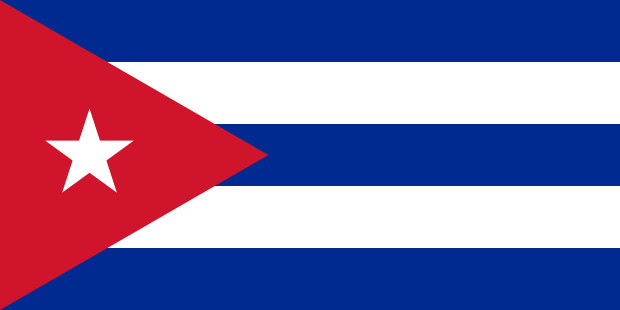
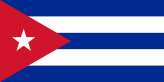
Country flag available in this resolutions
| Icon 32x16 |  |
| Icon 88x44 |  |
Cuba
Cuba, officially the Republic of Cuba, is an island country in the Caribbean Sea. It is the largest island in the Caribbean and the second most populous after Hispaniola. Its territory comprises the island of Cuba, the island of Youth, and numerous smaller islands. Cuba is located south of Florida and the Bahamas, west of Haiti, and north of Jamaica. The nation is characterized by a rich tapestry of history, a unique political and economic system, and a vibrant culture that has captivated the world. Its geographical position has historically made it a strategic location, influencing its development and interactions with other nations.
The demographic landscape of Cuba is a fascinating blend of influences, primarily stemming from its colonial past and subsequent migration patterns. The Cuban population is predominantly of mixed race, with significant European (primarily Spanish) and African ancestries, alongside smaller proportions of East Asian and Indigenous Caribbean heritage. This ethnic diversity has shaped Cuban society, contributing to its unique cultural expressions, music, dance, and cuisine. The population is relatively young compared to many developed nations, though like much of the world, Cuba is experiencing an aging trend. The birth rate has been declining, and life expectancy is high, reflecting a well-established healthcare system. Urbanization is a prominent feature, with a significant majority of Cubans residing in cities, particularly in the capital, Havana, which is the largest city in the Caribbean. Family ties are strong, and social solidarity is a deeply ingrained value, often emphasized by the state.
Cubas economy has undergone significant transformations throughout its history, marked by periods of socialist planning and, more recently, attempts at market-oriented reforms. Historically, agriculture, particularly sugar cane production, was the backbone of the Cuban economy. While sugar remains important, the economy has diversified, with tourism emerging as a crucial revenue generator. Other significant sectors include nickel mining, pharmaceuticals, and biotechnology. The state plays a dominant role in the economy, with most enterprises being state-owned. However, since the late 1980s and especially after the collapse of the Soviet Union, Cuba has cautiously opened up to foreign investment and allowed for the growth of private enterprise, albeit within a tightly regulated framework. The United States embargo, in place for decades, has had a profound and persistent impact on Cubas economic development, limiting trade and financial transactions. Despite these challenges, the Cuban government has strived to maintain a high level of social services, including free healthcare and education, which are considered fundamental rights for its citizens. The dual currency system, which existed for many years, was recently unified, a move aimed at simplifying economic transactions and fostering greater integration.
Geographically, Cuba is a land of striking contrasts and natural beauty. The islands elongated shape stretches for over 1,200 kilometers, boasting a diverse topography. The western part of the island is characterized by rolling hills and fertile plains, ideal for agriculture. Central Cuba features the Sierra del Escambray mountain range, offering breathtaking vistas and a rich biodiversity. The eastern part of the island is dominated by the Sierra Maestra, the highest mountain range, where revolutionary history is deeply intertwined with the landscape. Cubas coastline is extensive, with numerous bays, coves, and pristine beaches that attract tourists from around the globe. The climate is tropical, with a distinct wet season from May to October and a dry season from November to April. The island is also susceptible to hurricanes, which can pose significant challenges to its infrastructure and economy. The presence of numerous coral reefs surrounding the island makes it a popular destination for diving and snorkeling.
The history of Cuba is a compelling narrative of indigenous peoples, colonial conquest, revolutionary struggle, and the complex dynamics of the Cold War. The island was originally inhabited by Indigenous peoples, including the Taíno, Ciboney, and Guanahatabey. Christopher Columbus arrived in 1492, marking the beginning of Spanish colonization. For over four centuries, Cuba remained a Spanish colony, experiencing periods of economic exploitation and social stratification. The 19th century saw growing calls for independence, culminating in the Cuban War of Independence, which was ultimately aided by U.S. intervention. Following a brief period of U.S. military occupation, Cuba gained formal independence in 1902, though it remained heavily influenced by the United States. The mid-20th century was a turbulent period, marked by political instability and social unrest. In 1959, Fidel Castros revolutionary movement overthrew the U.S.-backed dictatorship of Fulgencio Batista. This event ushered in a new era, with the establishment of a socialist state, land reforms, and a nationalization of industries. The subsequent decades were characterized by Cubas alignment with the Soviet Union, its involvement in the Cold War, and the imposition of the U.S. embargo. The fall of the Soviet Union in the early 1990s presented Cuba with immense economic challenges, leading to a period known as the Special Period. In recent years, Cuba has sought to navigate its economic and political future, engaging in tentative reforms while maintaining its commitment to its socialist ideals. The legacy of its revolutionary past continues to shape its national identity and its place in the global arena.
Information about country Cuba
Automated text translation, excuse errors, please!
Informations are from the publication CIA The World Factbook.
Country Cuba is situated in a location / continent Central America. Cuba has an area of 110 860 km2 and 11 075 244 residents. The highest point has a height 2 005 above sea level. and it is called Pico Turquino. The lowest point is located at the level of 0 above sea level and it is named Caribbean Sea. System of government is Communist state and the date of independence 20th May 1902. The capital city is Havana. Cuba has the international abbreviation CU.
Cuba - economy
Total gross domestic product (GDP) is 114 100 000 000 $. Total gross domestic product per capita in purchasing power parity is 9 900 $. GDP grows by 1.50 % a year. Inflation (consumer price index) is equal to 4.70 % a year. Cuba have 5 153 000 working-age population (from a total population 11 075 244 people). Unemployment is at 1.40 %. Cuba issued 11.80 % GDP to healt care and 3,80 % GDP to army. The public debt of the country is 35.40 % GDP. The total amount of foreign debt is 21 520 000 000 USD.
Cuba - transport and telecommunications
Cuba has 60 858 km of roads, 8 598 km of railway lines and 136 airports. The total length of waterways (navigable rivers, canals, etc.) is 240 km. There is registered 3 ships.
Number of active mobile phones (sim card) in the country Cuba is 1 315 000. Number of active fixed telephone lines is 1 193 000. Cuba has 1 606 000 internet users, who have the available 3 196 Internet connections. Cuba has been assigned a domain first Choose range .cu.
Cuba - demography
As suggested above, Cuba has 11 075 244 people. Population growth is in the amount -0.12 % per year. Number of children born per 1000 population per year is 9.96.Every mother has average 1.45 children. The infant mortality rate is 4.83 and maternal mortality 73.00 deaths per 100,000 births. Average estimated life expectancy makes 77.87 years. Mortality is 7.52 people per 1000 population per year.
Cuba - energetics
Cuba consumes a year 14 650 000 000 kWh of electricity. Annual electricity production is 16 880 000 000 kWh in power plants with a total installed electrical capacity 5 522 000 kW. Cuba exports 0 kWh and imports 0 kWh of electricity per year Energy mix of power generation is as follows: fossil fuels: 98.8 %, nuclear energy: 0 %, renewable: 0.1 %, hydropower: 1.1 %. The country Cuba is harvested annually 55 000 barrels of oil.
Country flags
Flags of the world countries
Flags of the World countries
Dále doporučujeme:
Tipy na užitečné webyOdkazy nejen na naše partnerské weby
Linky na partnerské weby
Partnerské internetové stránky
Zajímavé webové stránky
 |
 |
 |
 |
 |
 |
 |
 |
 |
 |
 |
 |
 |
 |
 |
 |
 |
 |
 |