Eritrea
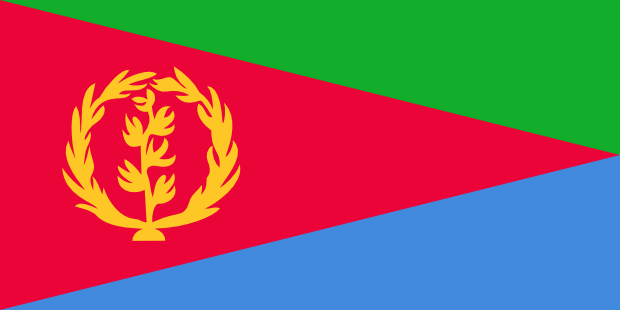
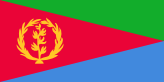
Country flag available in this resolutions
| Icon 32x16 |  |
| Icon 88x44 |  |
Eritrea
Eritrea: A Nation Forged in Conflict, Facing an Uncertain Future
Eritrea, a nation situated in the Horn of Africa, presents a complex tapestry of geography, history, and culture, deeply interwoven with a narrative of struggle and resilience. Its strategic location along the Red Sea coast has historically made it a coveted territory, influencing its destiny through periods of foreign domination and ultimately, a protracted war for independence. Today, Eritrea is a nation grappling with the challenges of nation-building, economic development, and its place on the global stage, all while navigating a highly centralized political system.
Demographics: A Mosaic of Peoples and Languages
The demographic landscape of Eritrea is characterized by its diversity, reflecting centuries of migration and interaction. The population, estimated to be around 6.7 million people, is composed of nine officially recognized ethnic groups, each with its own distinct language and cultural traditions. The largest of these are the Tigrinya people, who constitute the majority and are predominantly found in the highlands, speaking the Tigrinya language. Other significant ethnic groups include the Tigre, inhabiting the northern and western lowlands and speaking the Tigre language; the Saho, a pastoralist community in the eastern lowlands; the Afar, spread across the Danakil Depression; the Kunama, primarily in the western lowlands; the Rashaida, an Arab minority in the coastal plains; the Bilen, in the central highlands; the Nara, in the western lowlands; and the Hedareb, in the northern coastal region. This rich ethnic mosaic contributes to Eritrea’s vibrant cultural heritage, evident in its music, dance, cuisine, and traditional attire. The official languages are Tigrinya and Arabic, though English is also widely used in government and education. The majority of Eritreans adhere to Christianity, primarily the Eritrean Orthodox Tewahedo Church and Catholicism, while a significant Muslim population, largely Sunni, resides in the coastal and lowland areas. The countrys population is relatively young, with a median age of around 19 years, indicating a high birth rate and a significant proportion of the population in their reproductive years. This demographic structure presents both opportunities and challenges for future development, particularly in terms of education, employment, and resource allocation.
Geography: A Land of Contrasts
Eritrea’s geography is remarkably diverse, ranging from the arid coastal plains to the fertile highlands and rugged mountains. The country spans an area of approximately 117,600 square kilometers, bordering Sudan to the west, Ethiopia to the south, and Djibouti to the southeast. The Red Sea coast, stretching for over 1,000 kilometers, is a defining feature, encompassing a significant portion of the country’s territory and including the Dahlak Archipelago, a group of over 120 islands known for their rich marine life and historical significance. The eastern escarpment plunges dramatically from the highlands to the coastal plains, creating distinct climatic zones. The highlands, characterized by cooler temperatures and higher rainfall, are the most agriculturally productive regions, supporting a significant portion of the population. Here, the landscape is dominated by plateaus, valleys, and mountain ranges, including the Emba Soira, the highest peak in Eritrea. In contrast, the western lowlands and the Danakil Depression are characterized by extreme heat and arid conditions, with limited vegetation and sparse population. The country’s river systems are largely seasonal, with the Gash and Tekezé rivers being the most significant, originating in the highlands and flowing into Sudan. The diverse geographical features influence the country’s economy, with agriculture concentrated in the highlands, while fishing and port activities are concentrated along the coast. The arid nature of much of the country also presents challenges related to water scarcity and desertification, requiring careful resource management.
History: A Long Road to Independence
Eritrea’s history is a testament to its enduring spirit and its persistent struggle for self-determination. For centuries, the region was influenced by various empires and colonial powers. In the late 19th century, Italy established a colonial presence, laying the foundations for the modern Eritrean state. Following Italys defeat in World War II, Eritrea was federated with Ethiopia under a UN resolution in 1952, a move that was met with growing resistance from Eritreans who desired full independence. This led to a protracted and bloody liberation struggle that lasted for three decades. The Eritrean Peoples Liberation Front (EPLF), the dominant liberation movement, engaged in guerrilla warfare against Ethiopian forces, eventually emerging victorious in 1991 when it captured the capital, Asmara, and declared independence in 1993. This hard-won independence, however, did not usher in an era of peace and prosperity. A border dispute with Ethiopia erupted into a full-scale war from 1998 to 2000, resulting in tens of thousands of casualties and further devastating the already fragile economy. Despite a peace agreement signed in 2000, tensions with Ethiopia have remained high, and the border remains a sensitive issue. The post-independence period has been characterized by a highly centralized government under President Isaias Afwerki, who has led the country since its inception. The government has prioritized national security and self-reliance, often at the expense of political freedoms and economic liberalization. The prolonged military conscription has also had a significant impact on the countrys demographics and economy, leading to a large diaspora and brain drain.
Economy: A Command Economy Focused on Self-Reliance
Eritreas economy is largely a command economy, with the state playing a dominant role in most sectors. The country possesses significant mineral resources, including gold, copper, zinc, and potash, which are seen as crucial for future economic growth. The mining sector, particularly gold extraction, has become a significant contributor to the national income. Agriculture remains the backbone of the economy, employing a substantial portion of the population, though it is largely subsistence-based and highly vulnerable to drought and climate change. Key agricultural products include sorghum, millet, teff, wheat, barley, and pulses. Livestock rearing is also important, particularly in the pastoralist regions. The government has emphasized self-reliance and has limited foreign investment, preferring to develop its resources through state-owned enterprises and domestic capital. This approach, while aimed at protecting national sovereignty, has also hindered economic diversification and growth. The port of Massawa, on the Red Sea coast, is strategically important for trade and transit, and efforts are underway to modernize and expand its capacity. However, the overall economic infrastructure remains underdeveloped, and access to credit and capital is limited for private businesses. The ongoing national service program, which mandates extended military and civilian service for all citizens, has a significant impact on the labor market, diverting human resources from productive sectors and contributing to emigration. Despite the challenges, the government continues to pursue its vision of a self-sufficient and independent nation, focusing on the development of key infrastructure projects and the exploitation of its natural resources.
Conclusion: A Nation at a Crossroads
Eritrea stands at a critical juncture. Its long and arduous journey to independence has instilled a strong sense of national pride and resilience. However, the nation faces immense challenges in forging a prosperous and open future. The legacy of conflict, the centralized political system, and the underdeveloped economy all present significant hurdles. The country’s rich cultural heritage and its strategic location offer potential advantages, but realizing this potential will require a delicate balance between national sovereignty and engagement with the international community, between centralized control and the empowerment of its people, and between the pursuit of self-reliance and the embrace of necessary economic reforms. The future of Eritrea will undoubtedly be shaped by its ability to navigate these complex issues and to harness the strength and determination of its people.
Information about country Eritrea
Automated text translation, excuse errors, please!
Informations are from the publication CIA The World Factbook.
Country Eritrea is situated in a location / continent Africa. Eritrea has an area of 117 600 km2 and 6 086 495 residents. The highest point has a height 3 018 above sea level. and it is called Soira. The lowest point is located at the level of -75 above sea level and it is named Within Kulula near the Danakil Depression. System of government is transitional government and the date of independence 24th May 1993. The capital city is Asmara (Asmera). Eritrea has the international abbreviation ER.
Eritrea - economy
Total gross domestic product (GDP) is 4 089 000 000 $. Total gross domestic product per capita in purchasing power parity is 700 $. GDP grows by 8.70 % a year. Inflation (consumer price index) is equal to 20.00 % a year. Eritrea have 1 935 000 working-age population (from a total population 6 086 495 people). Eritrea issued 7.00 % GDP to healt care and 6,30 % GDP to army. The public debt of the country is 118.50 % GDP. The total amount of foreign debt is 1 077 000 000 USD.
Eritrea - transport and telecommunications
Eritrea has 4 010 km of roads, 306 km of railway lines and 13 airports. There is registered 4 ships.
Number of active mobile phones (sim card) in the country Eritrea is 241 900. Number of active fixed telephone lines is 58 000. Eritrea has 200 000 internet users, who have the available 870 Internet connections. Eritrea has been assigned a domain first Choose range .er.
Eritrea - demography
As suggested above, Eritrea has 6 086 495 people. Population growth is in the amount 2.42 % per year. Number of children born per 1000 population per year is 32.10.Every mother has average 4.37 children. The infant mortality rate is 40.34 and maternal mortality 240.00 deaths per 100,000 births. Average estimated life expectancy makes 62.86 years. Mortality is 7.92 people per 1000 population per year.
Eritrea - energetics
Eritrea consumes a year 242 000 000 kWh of electricity. Annual electricity production is 277 000 000 kWh in power plants with a total installed electrical capacity 139 000 kW. Eritrea exports 0 kWh and imports 0 kWh of electricity per year Energy mix of power generation is as follows: fossil fuels: 99.3 %, nuclear energy: 0 %, renewable: 0.7 %, hydropower: 0.0 %.
Country flags
Flags of the world countries
Flags of the World countries
Dále doporučujeme:
Zajímavé internetové odkazyNaše tipy na užitečné weby
Partnerské internetové stránky
Odkazy na partnerské weby
Odkazy nejen na naše partnerské weby
 |
 |
 |
 |
 |
 |
 |
 |
 |
 |
 |
 |
 |
 |
 |
 |
 |
 |
 |