Curacao
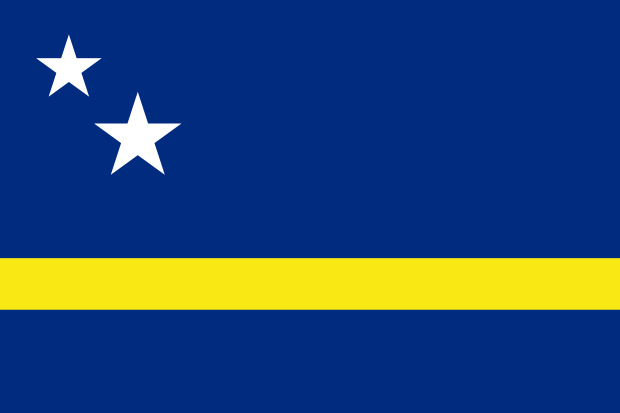
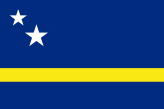
Country flag available in this resolutions
| Icon 32x21 |  |
| Icon 88x59 |  |
Curacao
Certainly, here is an article about Curaçao, approximately 3000 characters long, written in English with the specified formatting.
Curaçao: A Jewel in the Southern Caribbean
Geography and Natural Beauty
Nestled in the southern Caribbean Sea, just off the coast of Venezuela, lies the vibrant island of Curaçao. As the largest island of the ABC islands, which also include Aruba and Bonaire, Curaçao boasts a diverse and captivating geography. Its coastline is a dramatic tapestry of rugged cliffs, secluded coves, and stunning white-sand beaches, each offering a unique slice of Caribbean paradise. The interior of the island is characterized by rolling hills and a semi-arid landscape, a testament to its proximity to the South American mainland. This distinctive environment supports a unique flora and fauna, including the indigenous white-tailed deer and a kaleidoscope of bird species. The islands underwater world is equally spectacular, with vibrant coral reefs teeming with marine life, making it a world-renowned destination for diving and snorkeling. The capital city, Willemstad, is a UNESCO World Heritage site, celebrated for its colorful colonial architecture, a striking visual legacy of its Dutch heritage. The distinctive Handelskade waterfront, with its brightly painted buildings, is an iconic image of Curaçao and a hub of activity. The islands geological formation, a result of volcanic activity and coral growth over millennia, has shaped its dramatic topography, from the dramatic cliffs of the north coast to the calmer bays of the south. The presence of natural harbors has historically played a significant role in the islands development and its strategic importance.
A Rich and Complex History
Curaçao’s history is a fascinating narrative woven from indigenous roots, colonial powers, and a legacy of trade and resilience. Originally inhabited by the indigenous Caiquetio people, the island was discovered by Europeans in the late 15th century. However, it was the Dutch who ultimately established a lasting presence, taking control in the 17th century. Under Dutch rule, Curaçao became a crucial hub in the transatlantic slave trade, a dark chapter that profoundly shaped its demographics and culture. The island’s strategic location and excellent harbor made it a vital center for the exchange of goods and people. Over centuries, it passed through various hands, including brief periods of British and French occupation, before being firmly re-established as a Dutch colony. The 20th century saw Curaçao evolve as part of the Netherlands Antilles, a self-governing entity within the Kingdom of the Netherlands. This period was marked by significant economic development, particularly in the oil refining industry. In 2010, the Netherlands Antilles were dissolved, and Curaçao became a constituent country within the Kingdom of the Netherlands, retaining its autonomy while maintaining ties to the Dutch crown. This complex political status continues to influence its governance and international relations. The echoes of its past are visible in its architecture, its languages, and the diverse cultural fabric of its people.
Demographics: A Melting Pot of Cultures
The population of Curaçao is a vibrant testament to its history as a crossroads of cultures and peoples. With a population of just over 150,000, it is a relatively small but remarkably diverse community. The majority of Curaçaoans trace their ancestry back to West Africa, a direct consequence of the transatlantic slave trade. However, centuries of migration and trade have resulted in a rich mix of European (primarily Dutch, Portuguese, and Spanish), Middle Eastern, and Asian influences. This diverse heritage is reflected in the island’s unique Papiamento language, a creole language that blends elements of Dutch, Portuguese, Spanish, and African languages, and is spoken alongside Dutch and English. The religious landscape is predominantly Christian, with Roman Catholicism being the largest denomination, followed by Protestantism. There is also a significant Jewish community, with a history dating back to the 17th century, and smaller communities of other faiths. The social fabric is characterized by a strong sense of community and a welcoming spirit towards visitors. The islands cosmopolitan nature is further enhanced by a significant expatriate population, drawn by its economic opportunities and idyllic lifestyle. This demographic tapestry creates a dynamic and multicultural society, contributing to the island’s unique charm and character.
Economy: Tourism, Finance, and Resilience
Curaçaos economy is largely driven by its robust tourism sector and its established financial services industry. The islands breathtaking beaches, crystal-clear waters, and vibrant culture attract a steady stream of international visitors, contributing significantly to employment and foreign exchange earnings. The cruise ship industry also plays a vital role, bringing thousands of tourists ashore each year. Beyond tourism, Curaçao has a long-standing tradition in international finance and offshore banking, leveraging its stable political environment and favorable regulatory framework. Historically, the oil refining industry was a cornerstone of the economy, although its significance has fluctuated over the years. The government actively promotes diversification, seeking to foster growth in sectors such as renewable energy and logistics. Despite facing economic challenges, including the impact of global economic downturns and regional instability, Curaçao has demonstrated remarkable resilience. The island’s strategic location and its status within the Kingdom of the Netherlands provide a degree of economic stability. Efforts are continuously underway to enhance infrastructure, attract foreign investment, and promote sustainable economic development, ensuring the island’s continued prosperity in the years to come. The emphasis on niche tourism, such as eco-tourism and cultural tourism, is also gaining traction, offering new avenues for economic growth and employment.
Information about country Curacao
Automated text translation, excuse errors, please!
Informations are from the publication CIA The World Factbook.
Country Curacao is situated in a location / continent Central America. Curacao has an area of 444 km2 and 145 834 residents. ..Curacao has the international abbreviation CC.
Curacao - economy
Total gross domestic product (GDP) is 2 838 000 000 $. Total gross domestic product per capita in purchasing power parity is 15 000 $. GDP grows by 3.50 % a year. Inflation (consumer price index) is equal to 2.60 % a year. Curacao have 63 000 working-age population (from a total population 145 834 people). Unemployment is at 10.30 %.
Curacao - transport and telecommunications
Curacao has 550 km of roads and 1 airports.
Curacao - demography
As suggested above, Curacao has 145 834 people. Every mother has average 2.09 children. Mortality is 8.00 people per 1000 population per year.
Curacao - energetics
Curacao consumes a year 968 000 000 kWh of electricity. Annual electricity production is 1 167 000 000 kWh .Curacao exports 0 kWh and imports 0 kWh of electricity per year.
Country flags
Flags of the world countries
Flags of the World countries
Dále doporučujeme:
Doporučené odkazy a zdroje obsahuNaše tipy na užitečné weby
Zajímavé linky na nejrůznější weby
Odkazy na partnerské weby
Tipy na zajímavé weby
 |
 |
 |
 |
 |
 |
 |
 |
 |
 |
 |
 |
 |
 |
 |
 |
 |
 |
 |