Colombia

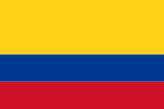
Country flag available in this resolutions
| Icon 32x21 |  |
| Icon 88x59 |  |
Colombia
Here is an article about Colombia, approximately 3000 characters long, written in English, using Czech quotation marks „“ and ’ instead of , and bold text with HTML tags .
Colombia: A Land of Diverse Landscapes and Rich Heritage
Colombia, officially the Republic of Colombia, is a South American nation situated in the northwestern part of the continent. It is a country of immense geographical diversity, bordering the Caribbean Sea to the north and the Pacific Ocean to the west, a unique characteristic among South American countries. This dual coastline grants Colombia significant maritime influence and access to vital trade routes. The countrys territory encompasses a vast array of landscapes, from the lush, Amazonian rainforest in the south and east, to the towering Andes Mountains that bisect the nation, creating distinct climatic zones and ecosystems. The Andes themselves are divided into three major ranges: the Cordillera Occidental, the Cordillera Central, and the Cordillera Oriental, each with its own unique geological features and biodiversity. Between these mountain ranges lie fertile valleys, such as the Magdalena River valley, a crucial artery for transportation and agriculture. To the north, the Guajira Peninsula is a starkly arid region, contrasting sharply with the tropical savannas of the Llanos Orientales to the east, vast plains that are home to extensive cattle ranching. The presence of numerous islands, including San Andrés, Providencia, and Santa Catalina in the Caribbean, further adds to Colombias geographical richness and strategic importance. This dramatic geographical variation directly influences the countrys climate, which ranges from hot and humid in the lowlands to cool and temperate in the highlands, supporting an extraordinary level of biodiversity, making Colombia one of the most megadiverse countries on Earth, boasting an astonishing number of species of plants, birds, amphibians, and butterflies.
The demographic landscape of Colombia is as varied as its geography, shaped by centuries of indigenous cultures, European colonization, and African heritage. The population is primarily a blend of European (mainly Spanish) and Indigenous peoples, with a significant Afro-Colombian population, particularly along the Caribbean and Pacific coasts. This mestizaje, or mixing of populations, has created a vibrant and diverse cultural tapestry. The majority of Colombians are Roman Catholic, reflecting the strong influence of Spanish colonization. Spanish is the official language, though numerous indigenous languages are still spoken in remote communities. The population is predominantly urban, with major cities like Bogotá, Medellín, Cali, and Barranquilla serving as economic and cultural hubs. Bogotá, the capital, is a sprawling metropolis perched high in the Andes, while Medellín, once notorious for its past, has transformed into a city renowned for its innovation and vibrant cultural scene. Cali is known as the „Capital of Salsa“ for its lively music and dance culture, and Barranquilla is a major port city and the birthplace of many Colombian artists and musicians, famous for its spectacular Carnival. Despite the urban concentration, rural areas remain significant, particularly for agriculture and traditional ways of life. Population growth has been moderate in recent decades, and the country faces challenges related to internal displacement due to historical conflicts, as well as emigration, particularly to the United States and Spain.
Colombias economy is the fourth-largest in Latin America and has experienced significant growth and transformation in recent decades, moving away from its historical reliance on coffee and towards a more diversified model. While coffee remains an important export, particularly high-quality Arabica beans, the countrys economic engine is now driven by a broader range of sectors. The extraction of natural resources plays a crucial role, with Colombia being a major producer of oil, coal, and emeralds. These commodities are vital for export revenue, though their extraction also presents environmental and social challenges. Manufacturing is another significant contributor, with industries producing textiles, apparel, food products, and chemicals. The service sector is rapidly expanding, encompassing finance, telecommunications, tourism, and information technology. Tourism, in particular, has seen a resurgence, capitalizing on Colombias stunning natural beauty, rich cultural heritage, and improving security. The country is actively seeking to attract foreign investment and promote innovation, with a focus on sectors like biotechnology, renewable energy, and creative industries. Despite economic progress, Colombia still faces challenges, including income inequality, poverty in certain regions, and the need for continued infrastructure development to connect its diverse territories. The government has implemented various policies aimed at fostering inclusive growth, improving education, and promoting peace and reconciliation, which are seen as essential for long-term economic stability and prosperity.
Colombias history is a complex and often tumultuous narrative, marked by periods of exploration, colonization, independence struggles, and internal conflict. The region was inhabited by various indigenous civilizations for millennia before the arrival of the Spanish conquistadors in the late 15th century. The Spanish conquest led to the subjugation of indigenous populations and the establishment of a colonial administration under the Viceroyalty of New Granada. This period saw the exploitation of natural resources and the imposition of Spanish culture and religion. The early 19th century witnessed a surge of independence movements across South America, and Colombia played a pivotal role in this struggle. Led by figures like Simón Bolívar, the Gran Colombia, a short-lived state that included present-day Colombia, Venezuela, Ecuador, and Panama, was established in 1819. Following the dissolution of Gran Colombia, the Republic of New Granada was formed, eventually evolving into the modern Republic of Colombia. The 20th century was largely defined by political instability and periods of violence, including La Violencia, a brutal civil conflict in the mid-20th century. More recently, Colombia has grappled with a protracted internal armed conflict involving guerrilla groups, paramilitary organizations, and drug cartels. Despite the immense challenges posed by this conflict, including widespread displacement and human rights abuses, Colombia has made significant strides in recent years, culminating in a peace agreement with the FARC guerrilla group in 2016. This agreement, while not without its complexities and ongoing challenges, represents a crucial step towards lasting peace and reconciliation, allowing the country to focus on development and harness its immense potential. The nations resilience and determination to overcome its past are testaments to the enduring spirit of the Colombian people.
Information about country Colombia
Automated text translation, excuse errors, please!
Informations are from the publication CIA The World Factbook.
Country Colombia is situated in a location / continent South America. Colombia has an area of 1 138 910 km2 and 45 239 079 residents. The highest point has a height 5 775 above sea level. and it is called Pico Cristobal Colon. The lowest point is located at the level of 0 above sea level and it is named Pacific Ocean. System of government is republic and the date of independence July 20, 1810. The capital city is Bogota. Colombia has the international abbreviation CO.
Colombia - economy
Total gross domestic product (GDP) is 478 000 000 000 $. Total gross domestic product per capita in purchasing power parity is 10 400 $. GDP grows by 5.90 % a year. Inflation (consumer price index) is equal to 3.40 % a year. Colombia have 22 450 000 working-age population (from a total population 45 239 079 people). Unemployment is at 10.80 %. Colombia issued 6.40 % GDP to healt care and 3,40 % GDP to army. The public debt of the country is 44.60 % GDP. The total amount of foreign debt is 68 760 000 000 USD.
Colombia - transport and telecommunications
Colombia has 141 374 km of roads, 874 km of railway lines and 862 airports. The total length of waterways (navigable rivers, canals, etc.) is 24 725 km. There is registered 12 ships.
Number of active mobile phones (sim card) in the country Colombia is 46 200 000. Number of active fixed telephone lines is 7 127 000. Colombia has 22 538 000 internet users, who have the available 4 281 000 Internet connections. Colombia has been assigned a domain first Choose range .co.
Colombia - demography
As suggested above, Colombia has 45 239 079 people. Population growth is in the amount 1.13 % per year. Number of children born per 1000 population per year is 17.23.Every mother has average 2.12 children. The infant mortality rate is 15.92 and maternal mortality 92.00 deaths per 100,000 births. Average estimated life expectancy makes 74.79 years. Mortality is 5.29 people per 1000 population per year.
Colombia - energetics
Colombia consumes a year 46 390 000 000 kWh of electricity. Annual electricity production is 56 280 000 000 kWh in power plants with a total installed electrical capacity 13 540 000 kW. Colombia exports 1 294 000 000 kWh and imports 8 220 000 000 kWh of electricity per year Energy mix of power generation is as follows: fossil fuels: 32.9 %, nuclear energy: 0 %, renewable: 0.4 %, hydropower: 66.6 %. The country Colombia is harvested annually 932 100 barrels of oil.
Country flags
Flags of the world countries
Flags of the World countries
Dále doporučujeme:
Odkazy na zajímavé webyNaše tipy na zajímavé stránky
Doporučené internetové odkazy
Zajímavé internetové odkazy
Doporučené odkazy a zdroje obsahu
 |
 |
 |
 |
 |
 |
 |
 |
 |
 |
 |
 |
 |
 |
 |
 |
 |
 |
 |