Egypt
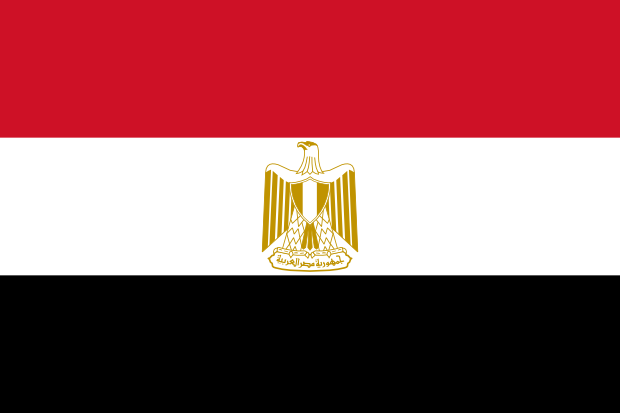
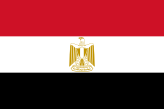
Country flag available in this resolutions
| Icon 32x21 |  |
| Icon 88x59 |  |
Egypt
Egypt, officially the Arab Republic of Egypt, is a transcontinental country spanning the northeast corner of Africa and southwest corner of Asia, connected by the Sinai Peninsula. It is a country steeped in millennia of history, a cradle of civilization that has witnessed the rise and fall of empires, the construction of monumental wonders, and the ebb and flow of powerful rivers. Its enduring appeal lies not only in its ancient past but also in its vibrant present and its strategic position in the global landscape.
The geography of Egypt is intrinsically linked to the Nile River, which has been its lifeblood for as long as recorded history. This mighty river, flowing from the south to the Mediterranean Sea, carves a fertile green ribbon through an otherwise arid desert landscape. The vast majority of Egypt’s population and agricultural activity is concentrated along the Nile Valley and its delta, a stark contrast to the immense, sparsely populated deserts that make up much of the country’s territory. To the west lies the Libyan Desert, part of the Sahara, characterized by vast sand dunes and rocky plateaus. To the east, the Arabian Desert stretches towards the Red Sea, a region of rugged mountains and wadis. The Sinai Peninsula, a triangular landmass, separates the Mediterranean Sea from the Red Sea and is a region of dramatic desert terrain, including Mount Sinai, a significant religious site. The country’s coastline along the Mediterranean in the north and the Red Sea in the east offers stunning natural beauty, with coral reefs and popular tourist destinations. The Suez Canal, an artificial sea-level waterway, bisects the Sinai Peninsula and is one of the world’s most important shipping lanes, connecting the Mediterranean Sea to the Red Sea and providing a crucial shortcut between Europe and Asia. This strategic waterway has played a pivotal role in Egypt’s economic and geopolitical importance throughout history.
Demographically, Egypt is the most populous Arab country and the third most populous on the African continent, with a rapidly growing population that now exceeds 100 million people. The majority of Egyptians are of Arab origin, with a significant minority of Nubians in the south and smaller ethnic groups. The population is overwhelmingly concentrated in urban areas, particularly in Cairo, the sprawling capital city, and Alexandria, the second-largest city. This urbanization has led to challenges such as overcrowding, strain on infrastructure, and environmental concerns. The Egyptian population is relatively young, with a high proportion of individuals under the age of 30, presenting both opportunities and challenges for the country’s future development. The official language is Arabic, and the predominant religion is Sunni Islam, with a significant Christian minority, primarily Coptic Orthodox.
The history of Egypt is one of the longest and most continuous in human civilization. Its ancient period, spanning over three millennia, is renowned for the pharaohs, pyramids, hieroglyphs, and sophisticated religious and political systems. Dynasties rose and fell, leaving behind an unparalleled legacy of monumental architecture and artistic achievements, including the Great Pyramids of Giza, the Sphinx, and the temples of Luxor and Karnak. Following the decline of the New Kingdom, Egypt experienced periods of foreign rule by Persians, Greeks (under Alexander the Great and the Ptolemaic dynasty, famously including Cleopatra), and Romans. The arrival of Islam in the 7th century AD marked a profound cultural and religious shift, ushering in the Islamic period of Egyptian history. Under various dynasties, including the Fatimids, Ayyubids, and Mamluks, Egypt remained a significant center of Islamic culture, learning, and trade. The Ottoman Empire gained control in the 16th century, and Egypt remained a province for centuries until the rise of Muhammad Ali in the early 19th century, who established a virtually independent state and initiated a period of modernization. British influence grew throughout the 19th and early 20th centuries, culminating in a protectorate. Egypt gained full independence in 1922, though British troops remained until the 1956 Suez Crisis. The 1952 revolution led to the establishment of a republic under Gamal Abdel Nasser, who nationalized the Suez Canal and played a leading role in Arab nationalism. Subsequent decades have seen periods of political upheaval, including the Arab-Israeli wars and the rise of President Hosni Mubarak, who ruled for nearly 30 years before being overthrown in the 2011 Egyptian Revolution. The country has since navigated a complex and evolving political landscape.
Egypt’s economy is diverse, though heavily reliant on a few key sectors. Historically, agriculture has been the backbone of the Egyptian economy, with cotton, rice, and fruits and vegetables being major crops, all sustained by the fertile Nile Valley. Tourism is another vital contributor, drawing millions of visitors annually to its ancient sites and Red Sea resorts, generating significant foreign exchange. The Suez Canal remains a crucial source of revenue for the Egyptian government, facilitating global trade and providing substantial income. The country also has a growing industrial sector, including textiles, petrochemicals, and food processing. However, Egypt faces significant economic challenges, including high unemployment, particularly among youth, inflation, and a substantial national debt. The government has been implementing economic reforms aimed at attracting foreign investment, diversifying the economy, and creating jobs. Natural resources, including oil and natural gas, are also significant, with production and export contributing to the national income. The discovery of large natural gas reserves in the Eastern Mediterranean has opened new avenues for economic growth and regional cooperation. Despite these efforts, poverty remains a persistent issue, and the country continues to strive for sustainable and inclusive economic development. The informal sector is also a significant, albeit often unquantified, part of the Egyptian economy, providing livelihoods for a large segment of the population.
Information about country Egypt
Automated text translation, excuse errors, please!
Informations are from the publication CIA The World Factbook.
Country Egypt is situated in a location / continent Africa. Egypt has an area of 1 001 450 km2 and 83 688 164 residents. The highest point has a height 2 629 above sea level. and it is called Mount Catherine. The lowest point is located at the level of -133 above sea level and it is named Qattara Depression. System of government is republic and the date of independence 28th February 1922. The capital city is Cairo. Egypt has the international abbreviation EG.
Egypt - economy
Total gross domestic product (GDP) is 525 600 000 000 $. Total gross domestic product per capita in purchasing power parity is 6 600 $. GDP grows by 1.80 % a year. Inflation (consumer price index) is equal to 10.20 % a year. Egypt have 27 740 000 working-age population (from a total population 83 688 164 people). Unemployment is at 12.20 %. Egypt issued 6.40 % GDP to healt care and 3,40 % GDP to army. The public debt of the country is 83.40 % GDP. The total amount of foreign debt is 33 740 000 000 USD.
Egypt - transport and telecommunications
Egypt has 65 050 km of roads, 5 083 km of railway lines and 84 airports. The total length of waterways (navigable rivers, canals, etc.) is 3 500 km. There is registered 67 ships.
Number of active mobile phones (sim card) in the country Egypt is 83 425 000. Number of active fixed telephone lines is 8 714 000. Egypt has 20 136 000 internet users, who have the available 200 336 Internet connections. Egypt has been assigned a domain first Choose range .eg.
Egypt - demography
As suggested above, Egypt has 83 688 164 people. Population growth is in the amount 1.92 % per year. Number of children born per 1000 population per year is 24.22.Every mother has average 2.94 children. The infant mortality rate is 24.23 and maternal mortality 66.00 deaths per 100,000 births. Average estimated life expectancy makes 72.93 years. Mortality is 4.80 people per 1000 population per year.
Egypt - energetics
Egypt consumes a year 115 800 000 000 kWh of electricity. Annual electricity production is 136 600 000 000 kWh in power plants with a total installed electrical capacity 24 670 000 kW. Egypt exports 1 118 000 000 kWh and imports 183 000 000 kWh of electricity per year Energy mix of power generation is as follows: fossil fuels: 86.9 %, nuclear energy: 0 %, renewable: 1.7 %, hydropower: 11.4 %. The country Egypt is harvested annually 711 500 barrels of oil.
Country flags
Flags of the world countries
Flags of the World countries
Dále doporučujeme:
Tipy na Partnerské webyNaše tipy na zajímavé stránky
Naše tipy na užitečné weby
Doporučené internetové odkazy
Zajímavé linky na nejrůznější weby
 |
 |
 |
 |
 |
 |
 |
 |
 |
 |
 |
 |
 |
 |
 |
 |
 |
 |
 |